close

News
Date published:
July 31, 2026
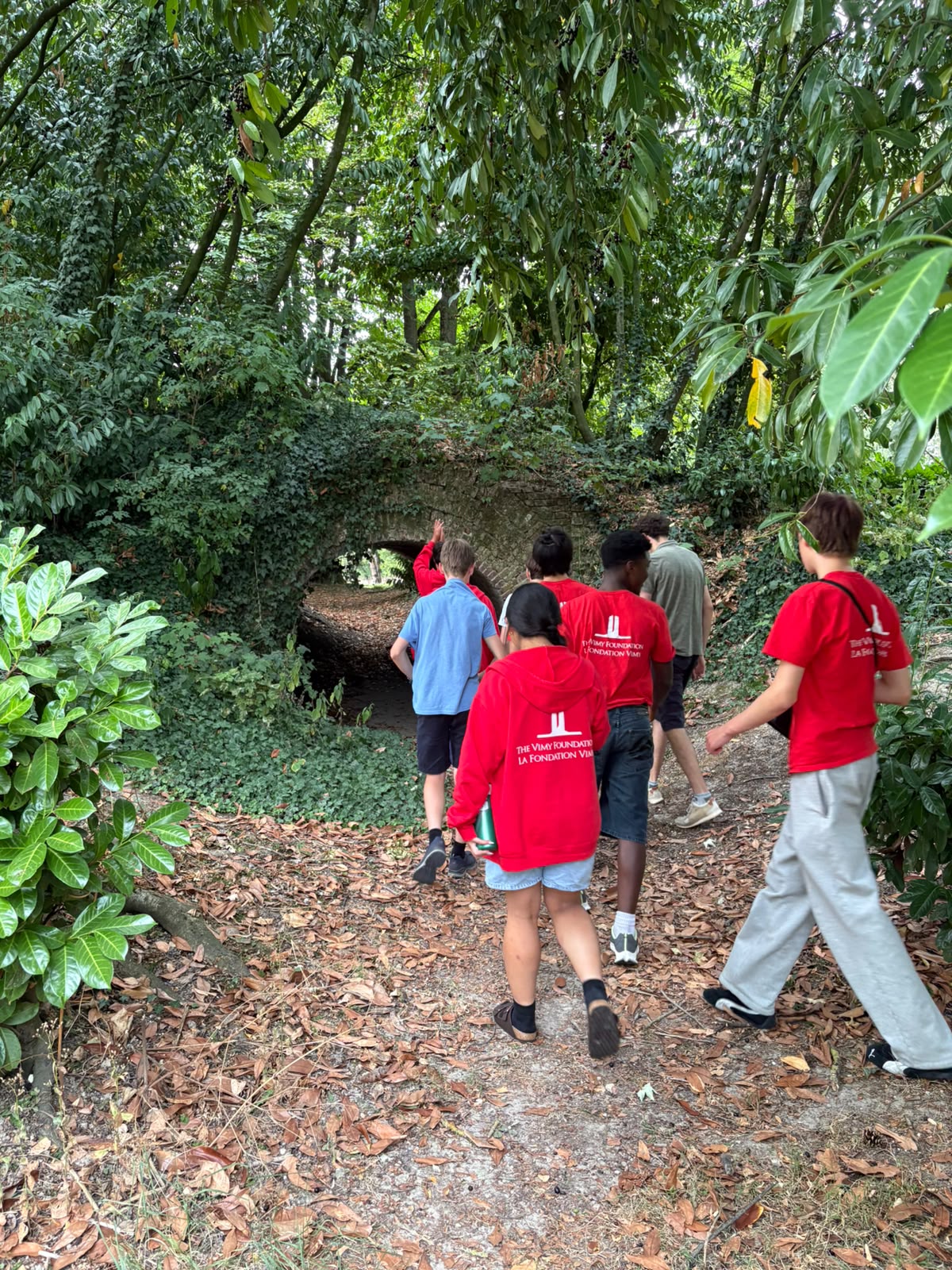
The students of this year's Beaverbrook Vimy Prize have officially arrived in Europe and kicked off their journey through France and Belgium.
To start off their reflections the students were asked to answer this question with one sentence:
“What does memory mean to you?”
Landon: Memory is a scar one gets on their mind that after a while could be faint, but will always remain.
Talia: Memory is us trying to hold onto the most important aspects of life as they rapidly fade into history.
Maximilien: La mémoire c’est se souvenir d’un passé qui fait toujours partie d'une certaine actualité.
Émile: Pour moi, la mémoire est quelque chose qu' on doit entretenir pour se rappeler des atrocités d’une guerre.
Hannah: Memory… is the frame in which we choose or are compelled to view what limits of the past we can retain – memory includes stories and emotions, and unavoidable connections to our present.
Nicolas: La mémoire est l’ensemble collectif des actions, gestes et paroles qui contribue à ne jamais oublier quelqu’un.
Zeineb: Memory for me is all the things that have happened – an experience which turns into a memory.
Mikayla: To me, memory means acknowledging and sharing both the beautiful and ugly, especially under a lens of impartiality and understanding.
Jack: To me, memory is how we acknowledge the past while working towards the future.
Lorenz: Memory means to remember the past, people, and events - to make them a legend.
Junior: Une mémoire n’est rien de plus qu’une façon simple de revivre le passé afin d’avancer.
Grace: Memory means remembering those who lived before me and contributed to the fortunate life that I am able to live today.
Sarah: To me, memory means remembering someone or something no matter how long its past, even if it doesn’t feel significant in the moment, would mean more than we initially thought.
Ji Woo: A memory is something that never dies even after the death of a person.
Emily: Memory is the traces that something leaves on the world around it.
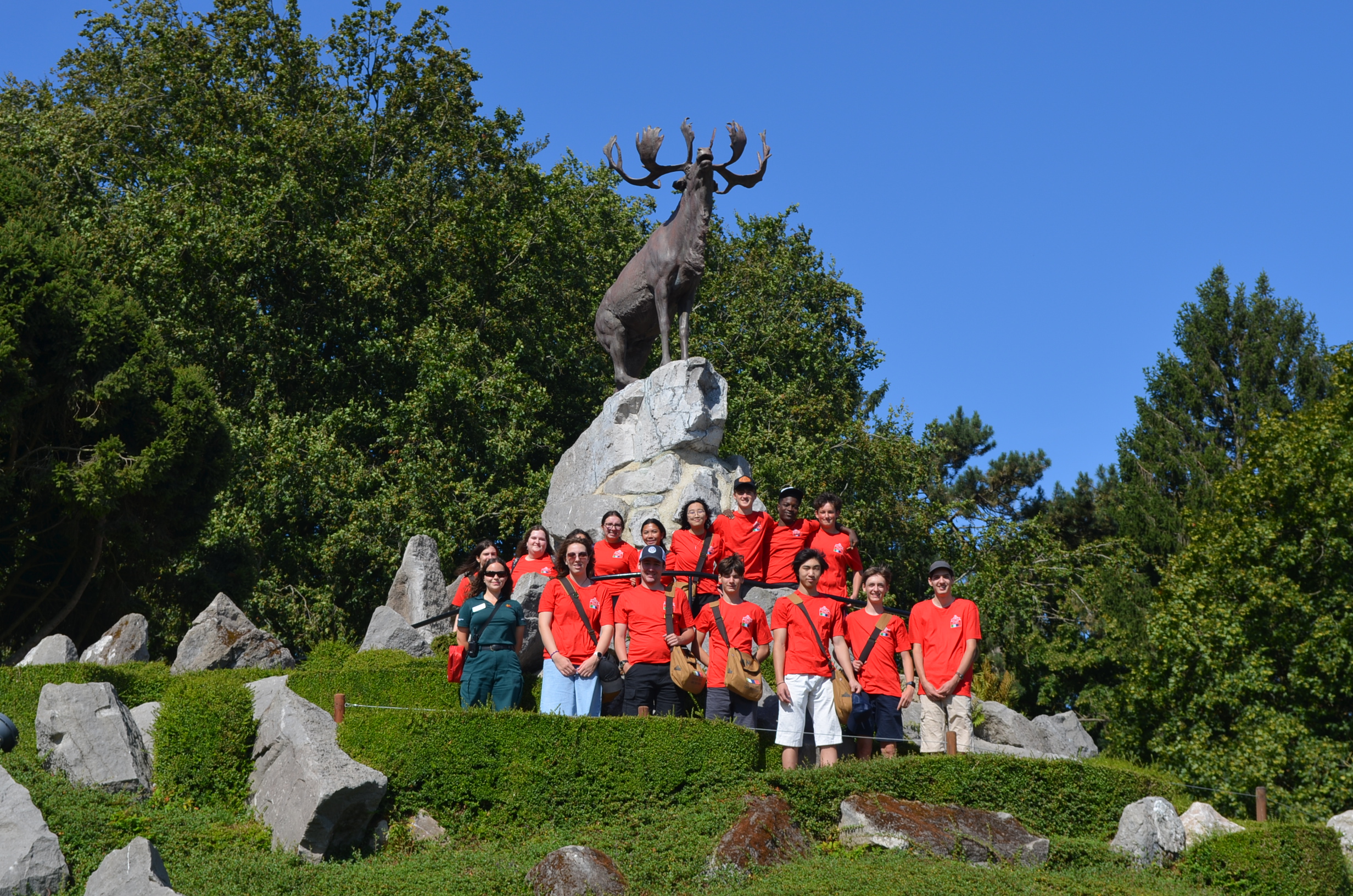
On day 2, the students embarked on their second day of the Beaverbrook Vimy Prize Program and their first full day exploring the memorials of the First World War.
The day began at the Beaumont-Hamel Newfoundland Memorial, where the students were guided through the site by Veterans Affairs Canada guide Emma. Together, they explored the history of the battlefield and reflected on the experiences of those who fought there.
In the afternoon, the group travelled to Thiepval, where they took part in a discussion on remembrance, sharing their perspectives on how we remember the past and why commemoration continues to matter today.
Today also marks the launch of the students' daily reflections. Emile and Mikayla are the first to share their experiences from the program.
Emile Giglmaier
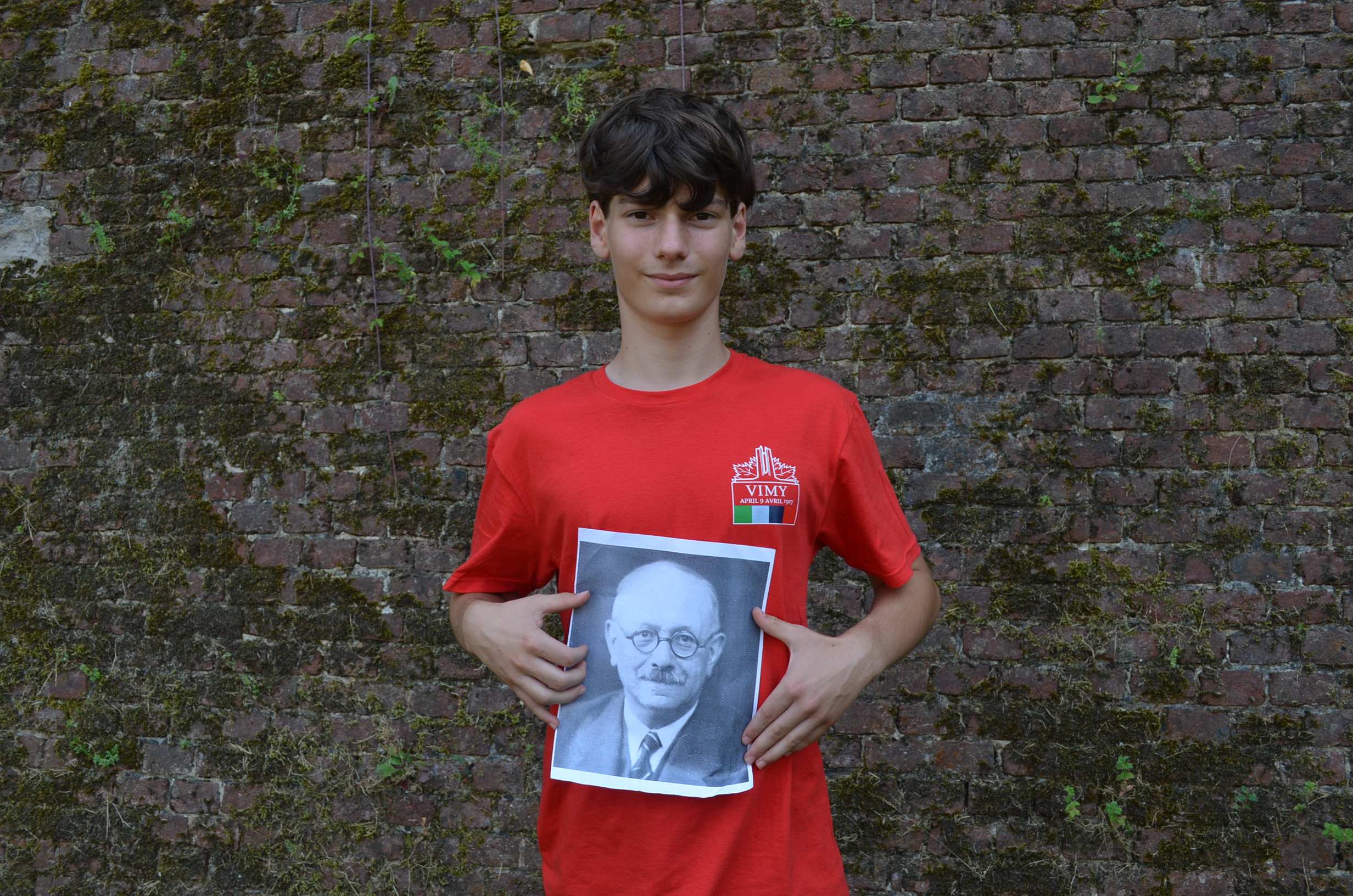
Today, on our second day of the BVP program, we had a very interesting and emotional program.
At first, we visited a Commonwealth cemetery, where we learned how such cemeteries are organized and why they were designed in this particular way. Then, we went to the Newfoundland Memorial, where a guide showed us around and told us about the battle that took place there. He explained how a communication error contributed to one of the deadliest days for the British Army during the First World War.
After that, we explored No Man’s Land together, the area that separated the opposing trenches during the war. Walking through this historic battlefield helped us imagine the difficult and dangerous conditions that soldiers had to face every day. Seeing the craters left by explosions was a powerful reminder of how devastating war can be—something we would probably never have experienced or understood so vividly without this program.
Next, we visited the Thiepval Memorial, one of the largest war memorials in the world. It commemorates more than 72,000 British and South African soldiers who died during the Battle of the Somme and whose bodies were never identified. Standing in front of such an impressive monument helped us understand the enormous sacrifices made during the war.
Later, we visited several military cemeteries belonging to different countries, including France, the United Kingdom, Germany, and India. Each cemetery had its own style and atmosphere, reflecting the traditions and culture of the country it represented. We observed the differences in the gravestones, symbols, and ways of honoring the soldiers. We also found the grave of a British soldier who was only 17 years old when he died—exactly the same age as some of the participants in our group.
Finally, two participants, Maximilian and Lorenz, presented the stories of two soldiers. Their presentations were especially interesting because they reminded us that soldiers were ordinary people with families, dreams, and ambitions. The soldier presented by Maximilian was an Australian explorer who had already taken part in expeditions to the South Pole before the war. The soldier presented by Lorenz had been a teacher at his own school before joining the army. These personal stories made history feel much more real and helped us better understand the human side of the conflict.
Mikayla Yung
My New Favourite Animal
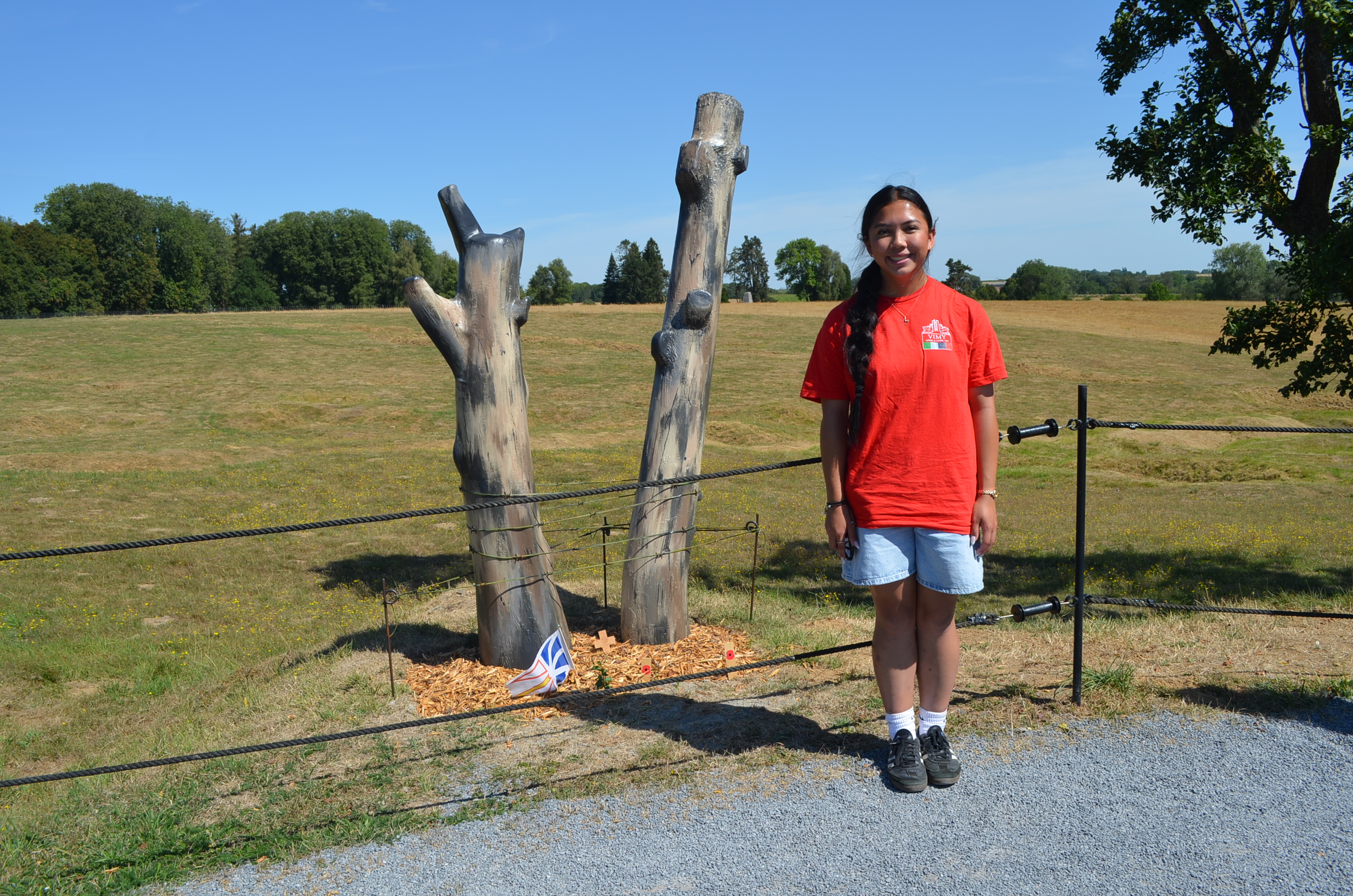
I think I have a new favourite animal. The thing is, I’ve never really had one…whenever someone asked me what my favourite animal was, I would usually give an easy answer like “dog” or say “I don’t know. I don’t really have one.” I never thought much about it because, to me, a favourite animal was just something you simply picked because you liked the way it looked or maybe because it was cute. It wasn’t something I really thought about, but this morning, I found myself standing at the Beaumont-Hamel Newfoundland Memorial, admiring a Bronze Caribou.
Our excellent guide, Emma, shared the story of the Royal Newfoundland Regiment and their legacy on July 1, 1916. She told us about George and Stanley Abbott, two Newfoundland brothers who enlisted together to fight for the British Empire. They went to war side by side, but like so many others that day, they never returned. The Abbott brothers’ bodies were never found, but their story—and their bond as brothers—will forever remain.
Then Emma explained why the Caribou became Royal Newfoundland’s symbol.
Caribou are known for staying with their herd. When faced with danger or distress, they don’t abandon each other. They stay. They move together, protect each other, and try to continue forward even when it’s not easy.
The Abbott brothers and the meaning of the caribou stayed with me throughout the rest of the day, even during our group’s game of Mafia tonight. I kept thinking about how George and Stanley Abbott entered the unknown together, as brothers who chose to stand beside one another. Their story reminded me that courage is found in having someone beside you when facing the hardest moments.
As I looked around our Beaverbrook Vimy Prize group tonight, I couldn’t help but see that same spirit of the caribou. We are all different. We come from different provinces, cultures, schools, and backgrounds. We each have our own stories, experiences, and reasons for being here, but we are brought together by a shared purpose.
As we continue to discuss the eye-opening tragedies, I can confidently say that we will be beside each other. I’m excited to see how our group grows throughout this journey and how, like a herd, we support one another along the way.
So, if someone asks me my favourite animal now, I finally have an answer.
A caribou.
Not because it is the biggest, fastest, or strongest animal, but because it symbolizes something far, far more meaningful. It reminds me of George and Stanley Abbott, and of everyone who has found courage through the people standing beside them. True strength is found in the people who choose to stand with you and after only one day, I already feel lucky enough to be part of this BVP herd.
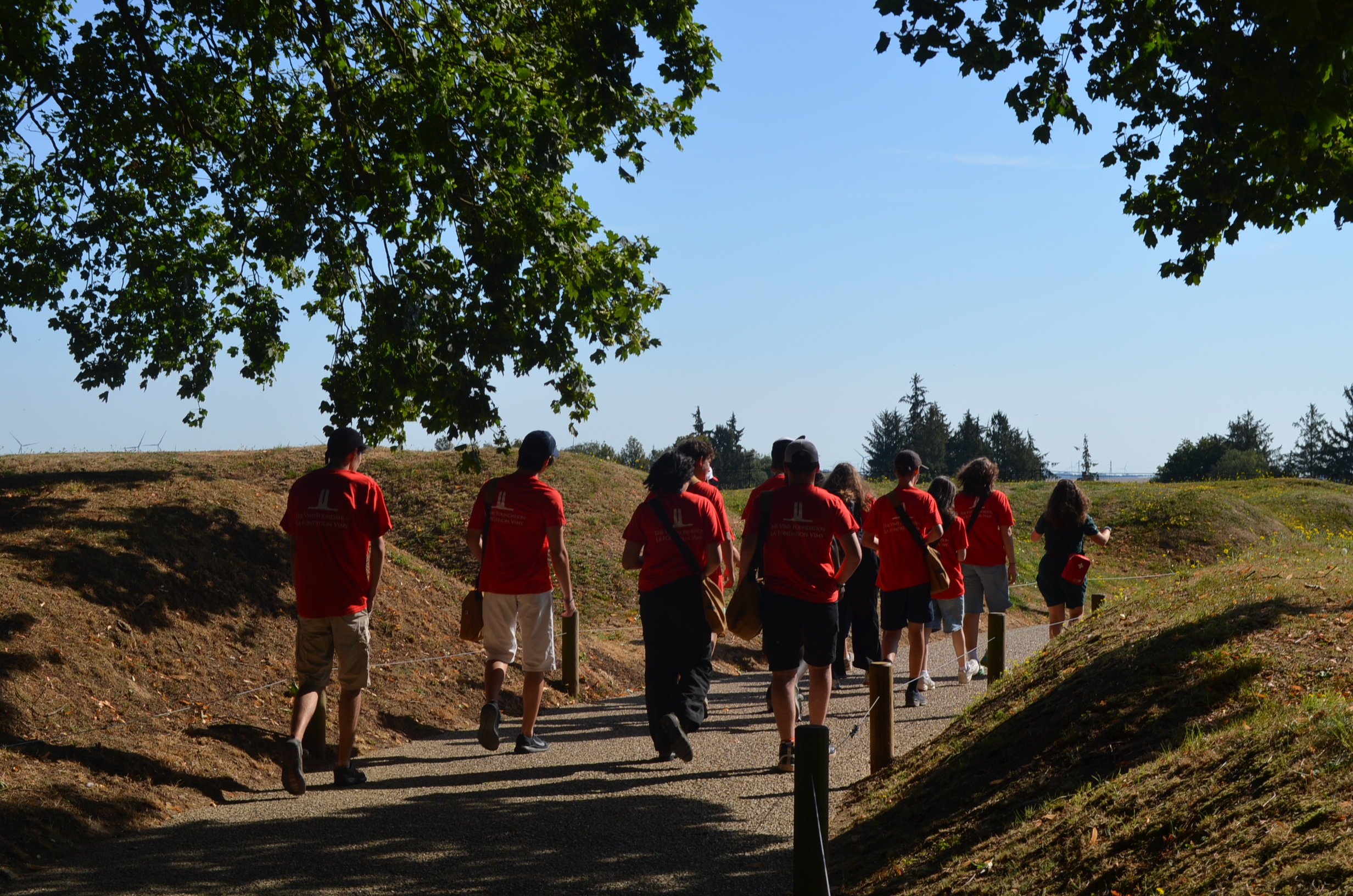
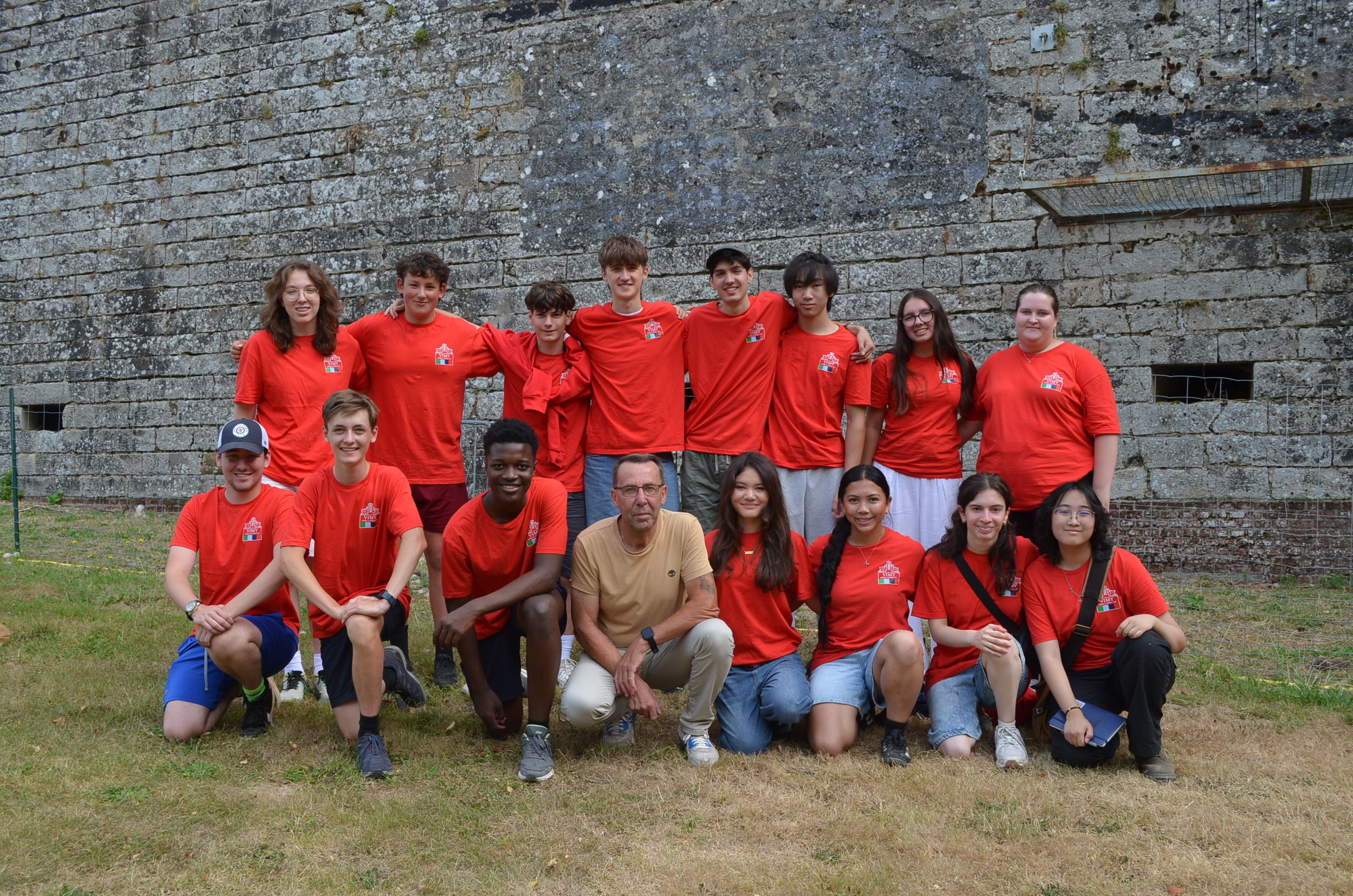
On day 3, the students continued their journey through the Beaverbrook Vimy Prize Program with another day of exploring the history and legacy of the First World War.
The day began at the Citadelle de Doullens, where the students were guided through the historic site by their guide, Gilles. They then continued their travels with a tour of several Commonwealth War Graves Commission sites, led by their guide, Isa, where they learned more about the work of commemorating those who lost their lives during the war.
Today's daily reflections come from Zeineb and Nicolas, who share their thoughts and experiences from the program so far.
Zeineb Imazitene
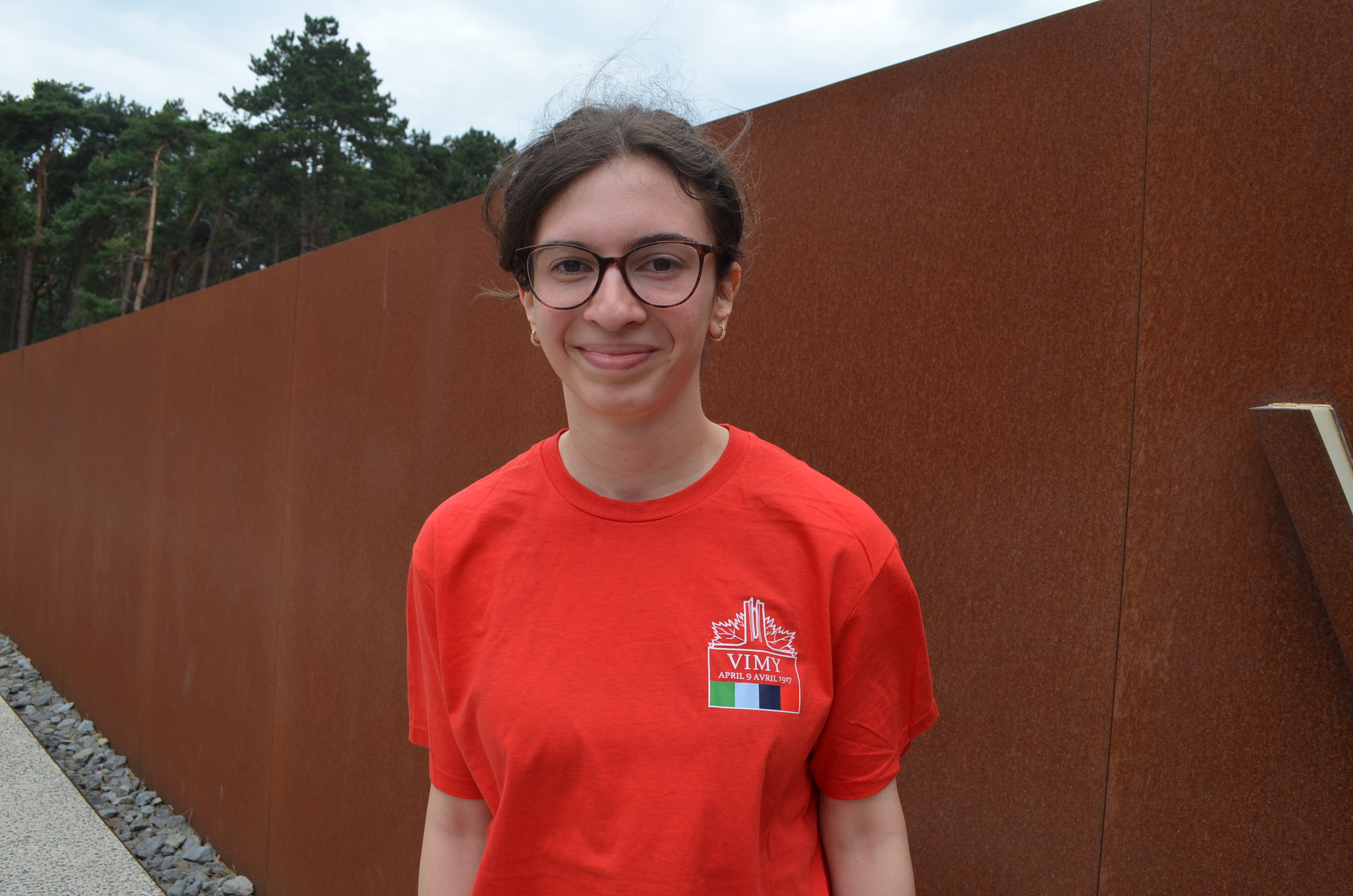
Today, we woke up early as we were headed to the Citadelle de Doullens and I was excited to visit this site because it really taught me about how complex history can be in one location. One aspect I noticed right away was the architecture as this location was built in 1530, and I was amazed about how humans constructed this citadel. Another part I really enjoyed was the history of the site itself; going from being Spanish, over to the French, then a field hospital in the First World War and then a Prisoner of War Camp by the Germans in the Second World War. (And now, a lovely education centre for all to visit, Thank you Gilles!). What I found ironic was that during the First World War, this place was that of a hospital, meant to heal and care for people whereas it was the complete opposite use for the Second World War. As I was reflecting on this site in the context of both world wars, first being a place to heal between 1914 and 1918 and then being a place of terror afterwards, the change and multiuse of this space made me realize how much one location can be adjusted to human use.
The last stop we made today was visiting the Notre Dame de Lorette French Cemetery where we finally got to meet Pierre! The first thing I noticed was how elegant the cemeteries and memorials that we have visited have been so far on the program. The immense effort that gardeners and site-keepers have put into keeping these memorials special – brought a sense of peace to me and Notre Dame de Lorette was no exception. It made me reflect on the impact of war as when I see the numbers in a textbook, they do not reflect how real it really is when you see the amount of gravestones in person. Even though this war happened over 100 years ago, it has not altered the cultural and emotional connection and importance to today’s society. People today dedicate their lives to understanding this history and that it has not been forgotten. Pierre pointed out that there were several Muslim graves that were left blank in case any more French Muslim casualties would be found in the future. It felt gratifying knowing that they would be given a place to rest and this was such a hopeful sign for me. I feel so privileged to be able to visit these sites today due to the consistent maintenance and devoted dedication of the veteran volunteers and historians who take care of these memorial sites.
Nicolas Abrard
En entrant dans la Citadelle de Doullens, nous avons rencontré notre guide pour cette aventure: Gilles Pireaux. C’est lui qui nous a amenés dans les tunnels. Dès le début, j’ai eu l’impression que chaque chambre était un portail vers la prochaine étape de la journée. À chaque détour, ce n’était pas simplement un mur en pierre, mais une nouvelle histoire à découvrir. Chaque sortie menait vers un autre lieu de mémoire, d'autres soldats et infirmières dont l'histoire était dévoilée.
Après avoir quitté les profondeurs de la Citadelle et avoir appris son histoire compliquée, nous avons poursuivi notre chemin comme si nous étions dans une machine à traverser le temps. Chaque arrêt était une nouvelle lumière qui illuminait une nouvelle histoire. D’abord, nous avons observé le cimetière où Ji Woo a présenté l’histoire de son infirmière. Après, c’était la visite du centre officiel du CWGC. Nous avons appris comment le Commonwealth War Graves Commission crée les pierres tombales de soldats et nous avons vu le processus d'identification des soldats inconnus. Après, dans le prochain tunnel était le Aviators Mémorial où Hannah a présenté l’histoire de son pilote britannique. Plus nous avancions, plus nos connaissances de la guerre s'approfondissaient. Le prochain a présenté était Emile qui a parlé d’un membre de la résistance française au Mur des Fusillés à Arras. Le dernier passage du tunnel était celui de Notre-Dame-de-Lorette où Hannah et Maximilien et moi avons présenté la commémoration de la guerre en France, au Canada et au Royaume-Uni. Avant la fin de la visite, Pierre nous a raconté l’histoire du cimetière et du monument.
En arrivant à la lumière à la fin du tunnel j’ai réalisé que l’expérience que j’ai vécue aujourd’hui représentait une métaphore de notre progamme: Chaque pas dans le tunnel nous rapprochait d’une meilleure compréhension et mémoire de la guerre. Je suis tellement reconnaissant d’avoir pu vivre cette expérience aujourd’hui.
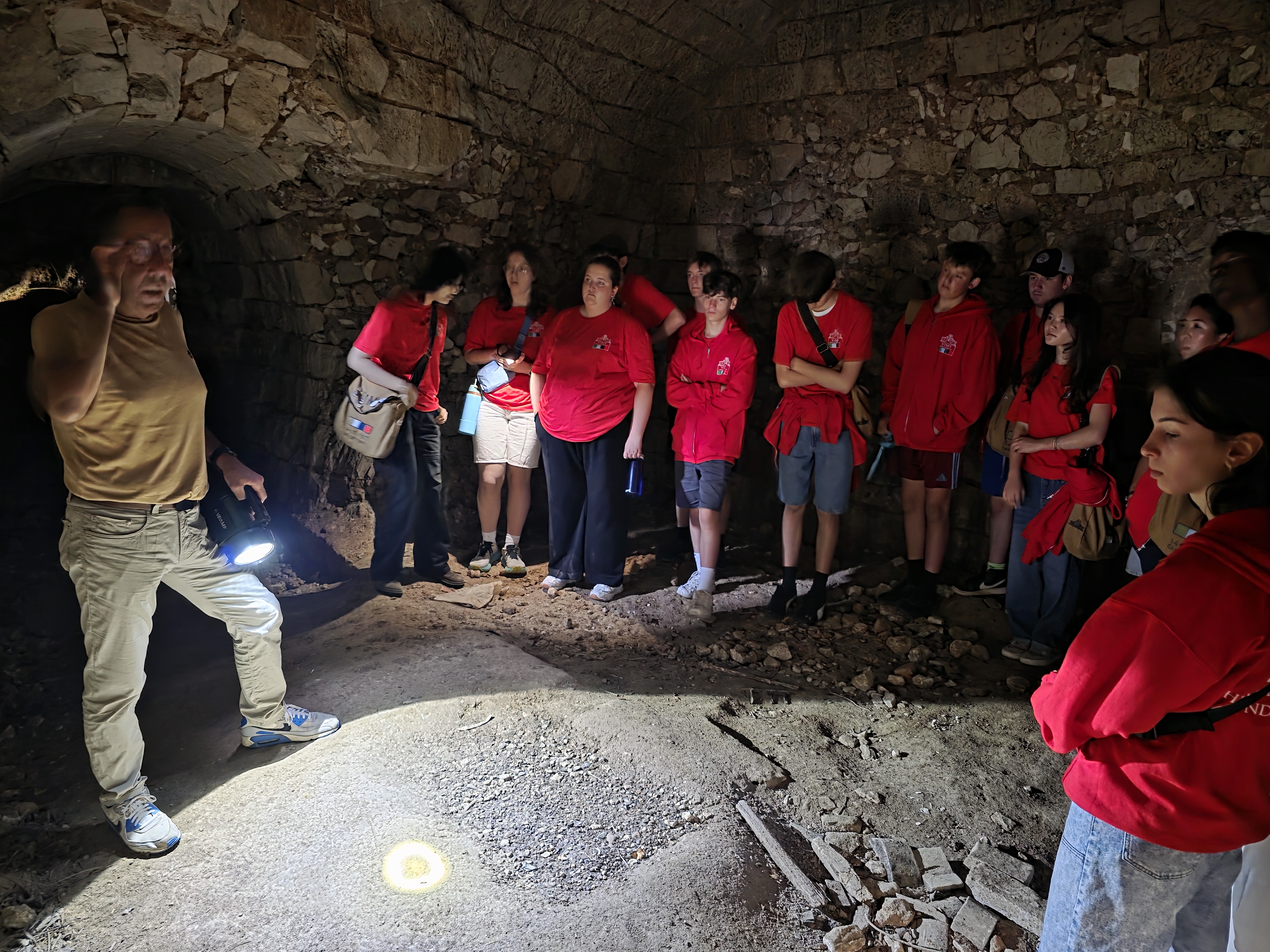
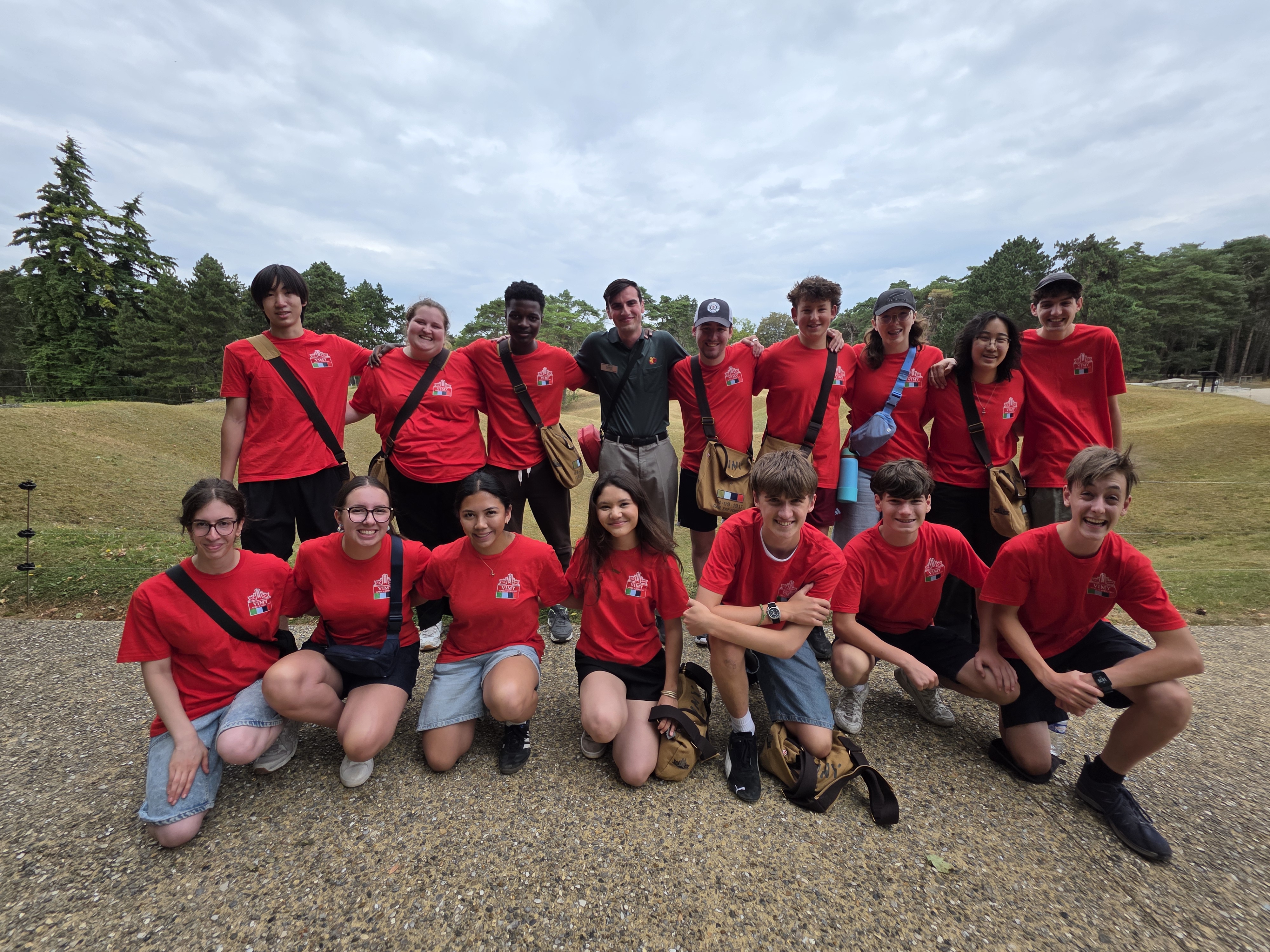
On day 4, the students continued their journey through the Beaverbrook Vimy Prize program with a day of exploration at Vimy Ridge and the surrounding memorial sites.
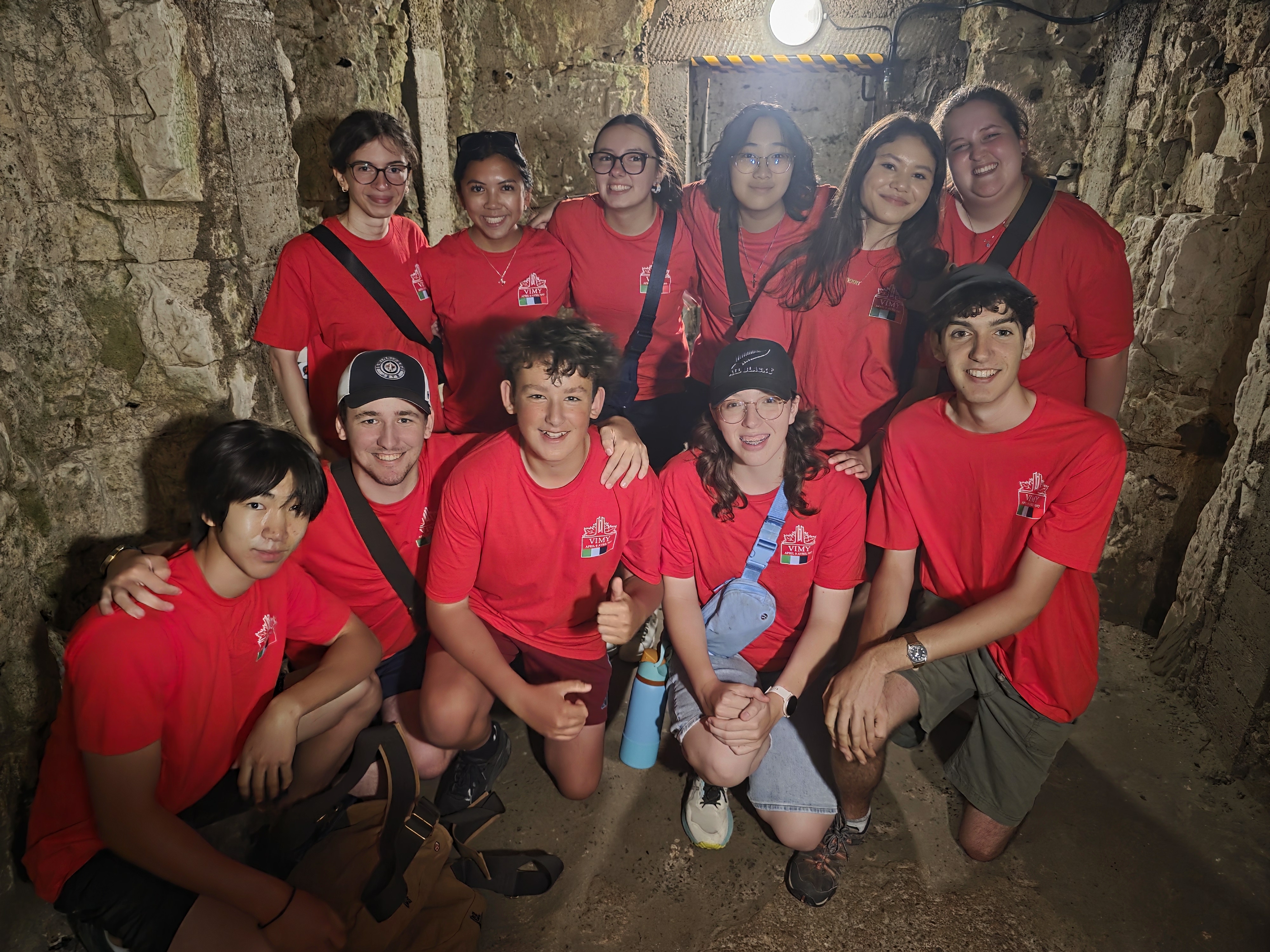
The day began with a special visit to the Canadian National Vimy Memorial, where the students were guided by Veterans Affairs Canada guide Parker, a Beaverbrook Vimy Prize 2023 alumnus. The group also had the opportunity to take part in a special tour of the Vimy tunnels.
Throughout the day, students led presentations at several sites, exploring a range of perspectives on the First World War. Thomas facilitated a discussion on anti-colonialism at the Zivy Crater Site. Landon and Junior presented on the daily life of soldiers at the 3rd Division Memorial. Rosalie examined German memory and Jewish participation in the First World War at the Neuville-St. Vaast German Military Cemetery. Sarah spoke about the Unknown Soldier at Cabaret-Rouge British Cemetery, while Chloe explored the contributions of LGBTQ+ communities to Canada's war effort at Ecoivres Military Cemetery.
Today's reflections are from Landon and Sarah.
Landon Smith
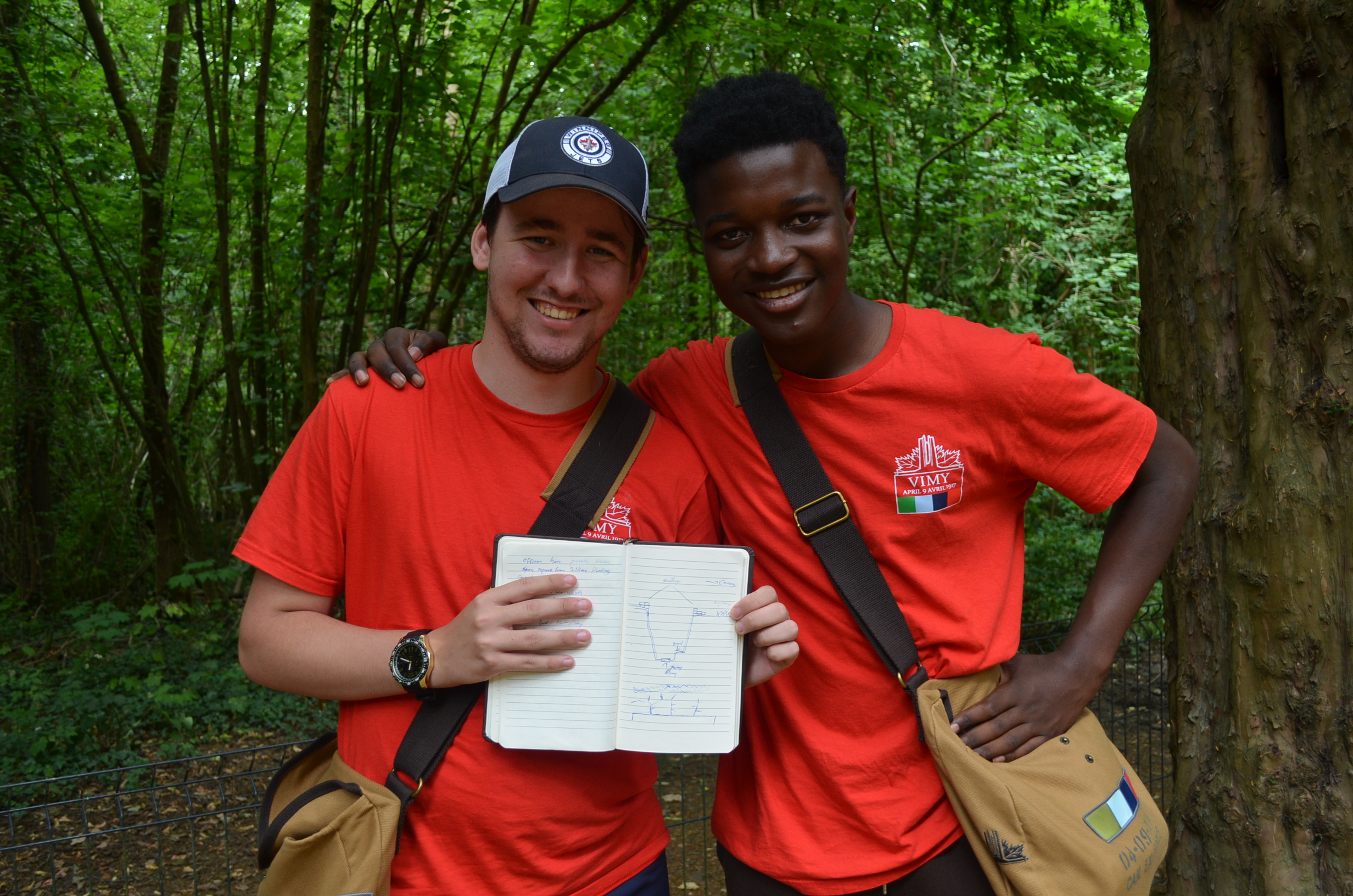
Today, my roommate and I woke up at 7:00 to prepare for our eventful, 4th day of the BVP program. On this day, we were going to be visiting many sites such as the historical Vimy Ridge, Zivy Crater, as well as a monument constructed by the 3rd Canadian Division in Vimy Ridge. I was very eager to get out and about today as I had always wanted to see the ridge in person. Also, today was the day that I would present my group project on the daily lives of soldiers during the First World War.
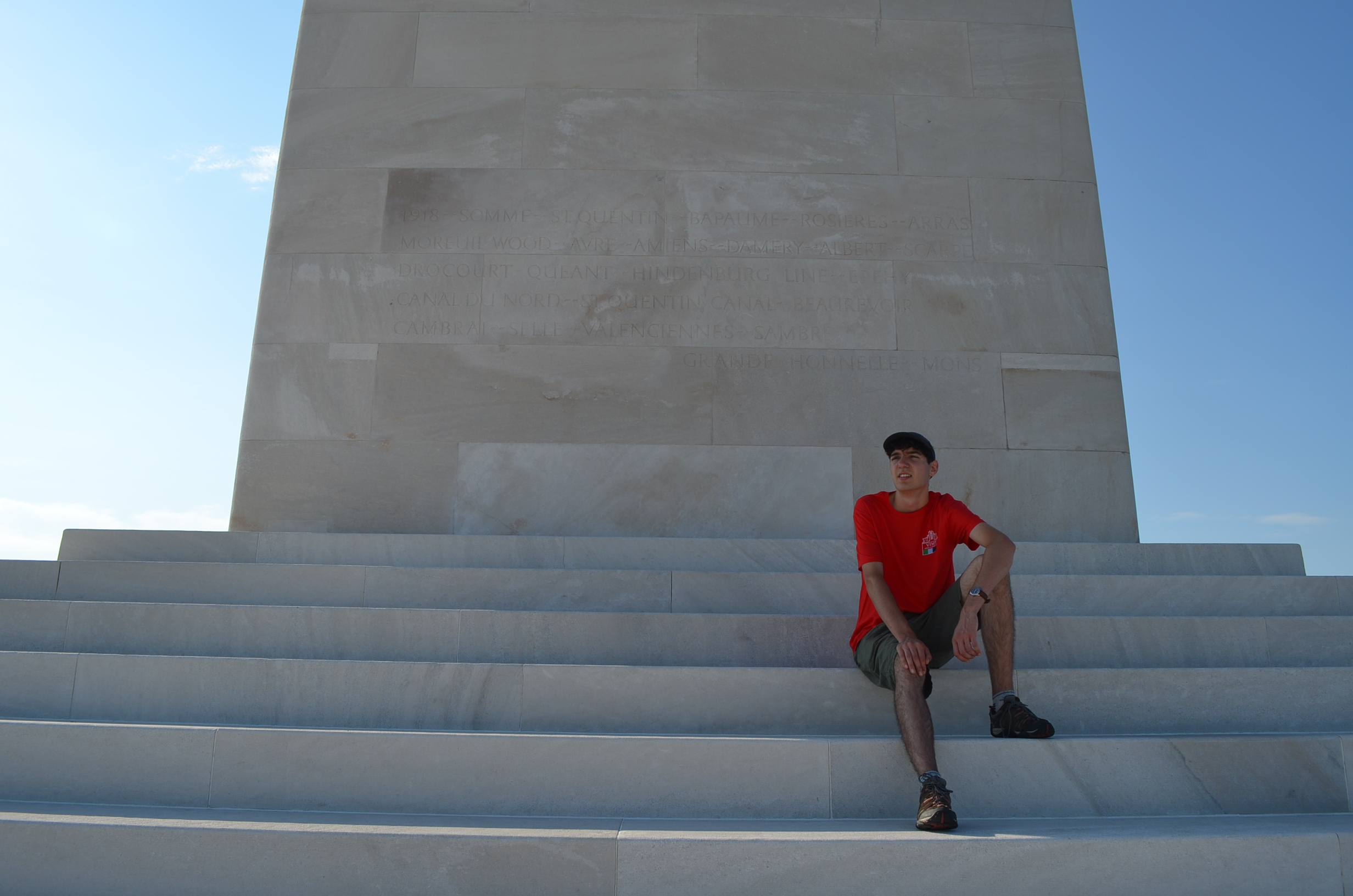
We visited Vimy Ridge as soon as we left the hotel. Seeing the monument in person was beautiful. The two glistening white pillars surrounded by the statues truly was a sight to see. I stood in front of the monument and time stopped, all I could do was let my emotions take control and cry, knowing that this monument was one of the reasons I was able to participate in this program. However, that is not the only reason. During my application process for the program, there was a large amount of stress in my life. I had made a promise to my grandmother that I would take pictures of the monument on the ridge for her, as she had always wanted to see it for herself.
She passed away before I found out I was accepted into the program.
Standing in front of the Vimy Monument today made me feel fulfilled. I had completed the promise I had made to my grandmother and even though I will not be able to show her in person, I know that somewhere she experienced it with me.
The monument is the most beautiful thing I have ever seen. I spent a large fraction of my time on the site just sitting in front of it. I thought about what it stood for and the sacrifices that were put into it’s construction. The thousands of names carved into her stone shall remain there forever and shall never be forgotten. It was a very emotional day, but that is not a bad thing. As humans we need to express emotion whether it be laughing, crying, or any other way. Personally, I am glad I was able to express my emotions of the monument surrounded by my dear friends who accompany me on this once in a lifetime journey.
Rest in Peace Nan, I know I made you proud.
Sarah Tahiry
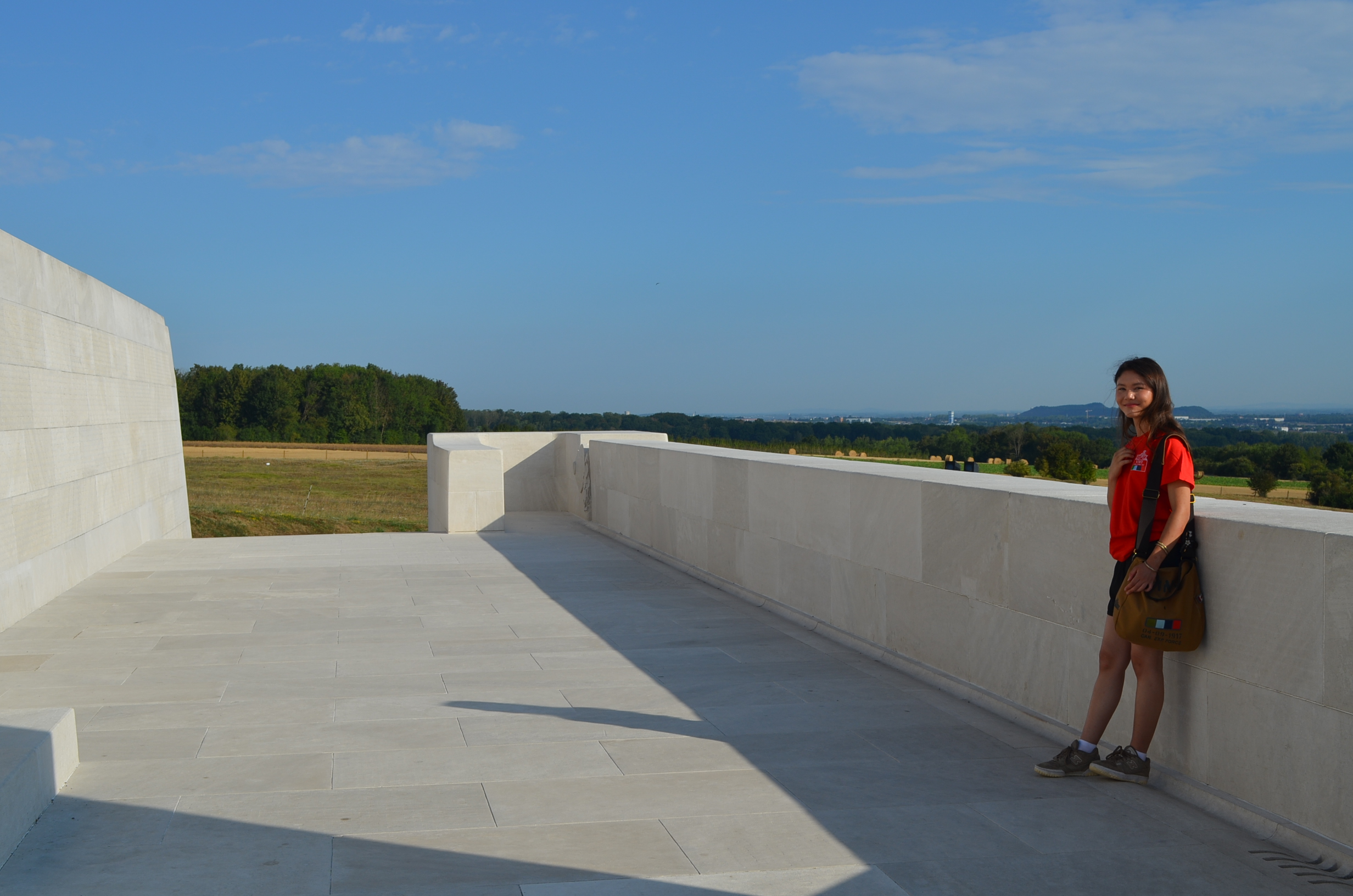
Vimy Ridge, I always heard stories in history class or at the dinner table and saw the photos of it on our twenty dollars bills, history books or everyday on the logo of our shirts. Photos were invented to capture everything about a site but could it ever possibly hold the emotions that comes with visiting a site? After today's experience I can confidently say no. Visiting the site and seeing the huge structure of The Vimy Ridge for the first time was such a surreal experience that those pictures we always see does not hold any meaning compared to experiencing it in real life not because of the massive scale but because of all the different reactions that my peers around me had compared to mine. Today felt a lot more important than the days before because I looked forward to seeing Vimy with The Vimy Foundation for so long and now I was standing in front of the place Canada was born.
In an activity we did, we were supposed to find words to describe the site and also our emotions. The difference in perspectives and how each one of us related to the memorial place was so different. Some were overwhelmed, sad by seeing the sheer amount of fallen soldier’s names while others were proud to see a place of birth and victory. To me what stood out the most was our chaperones speech about the irony of how the site is so quiet while the field was so loud and distraught during the battle and how this could be seen as such a beautiful symbol of hope for all those countries going through conflicts. As an Afghan- Canadian myself that felt so special to feel hope for a better situation for my home while standing at the birth of my other home, it felt so fulfilling and beautiful.
After, I had my presentation on a Canadian fallen soldier at The Cabaret Rouge Cemetery. Standing there, looking down at the word “ Unknown" carved on the grave stone while presenting a brave soldier who didn’t get to keep his precious life felt so real, and before I joined the program I always used that word “real” but today I experienced how it feels to relate to the word “ real”. It was such a pure moment of representing a fallen soldier with very little information and it felt so real and intentional to be standing before a grave and talking about one of millions who didn’t make it home.
Each day in BVP is a new experience where I learn to commemorate all those who lost their lives and I could not be more grateful to be a part of it alongside so many incredible people.
On day 5, the students crossed into Belgium for another day of learning and reflection as part of the Beaverbrook Vimy Prize Program.
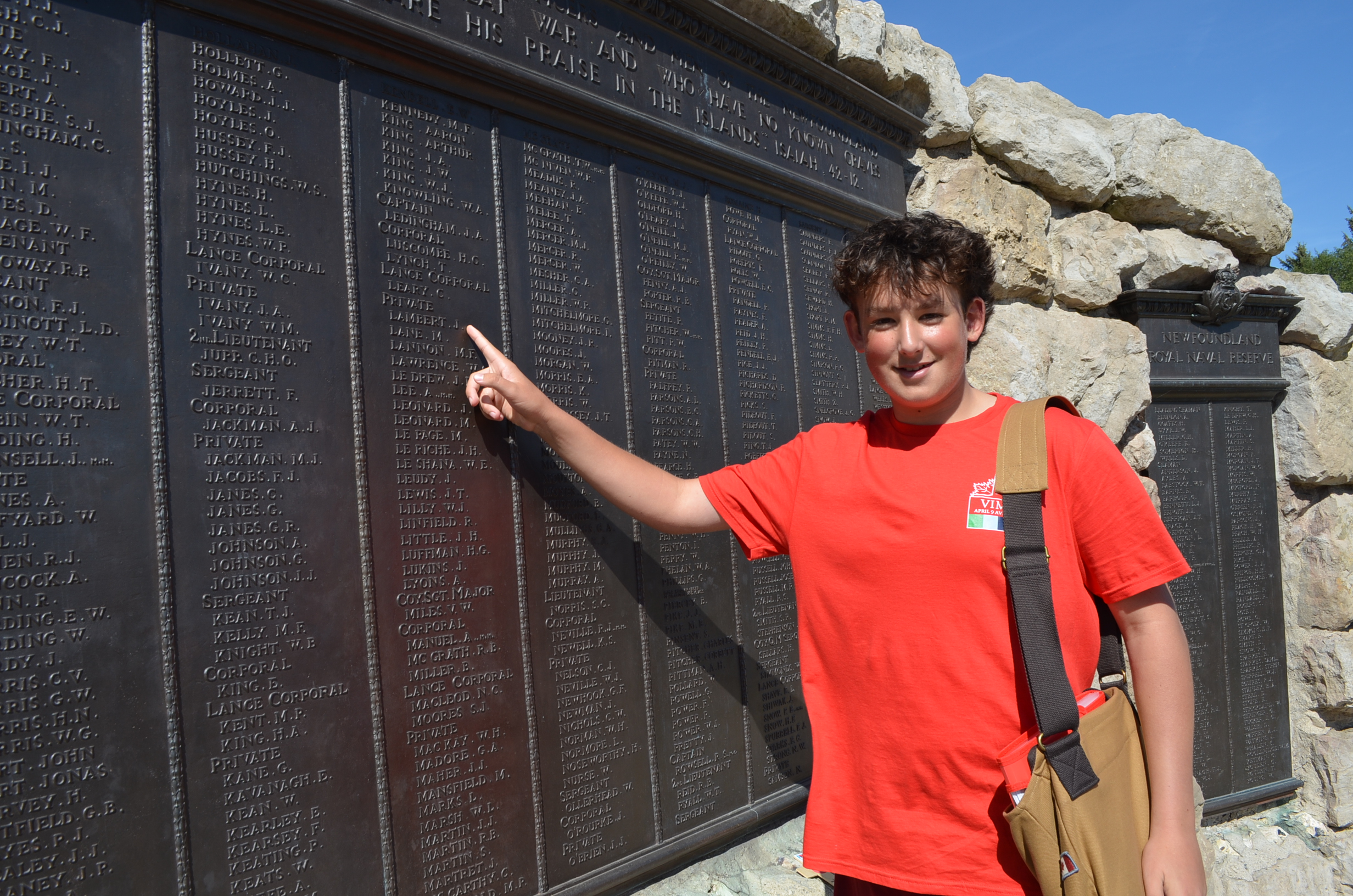
The day began at the Passchendaele Memorial Museum before the group visited several significant First World War sites throughout the Ypres Salient. At Sanctuary Wood Cemetery, Talia presented the story of her relative, Thomas Jones, whose service has a personal connection to her own family history. At New Irish Farm Cemetery, Nicolas shared the story of Lambert, a Newfoundland soldier whose remains were identified only recently, followed by Mikayla's presentation on her soldier. The group then travelled to Langemark German Military Cemetery, where Rosalie led a discussion on the legacy of Langemark and the site's place in German remembrance.
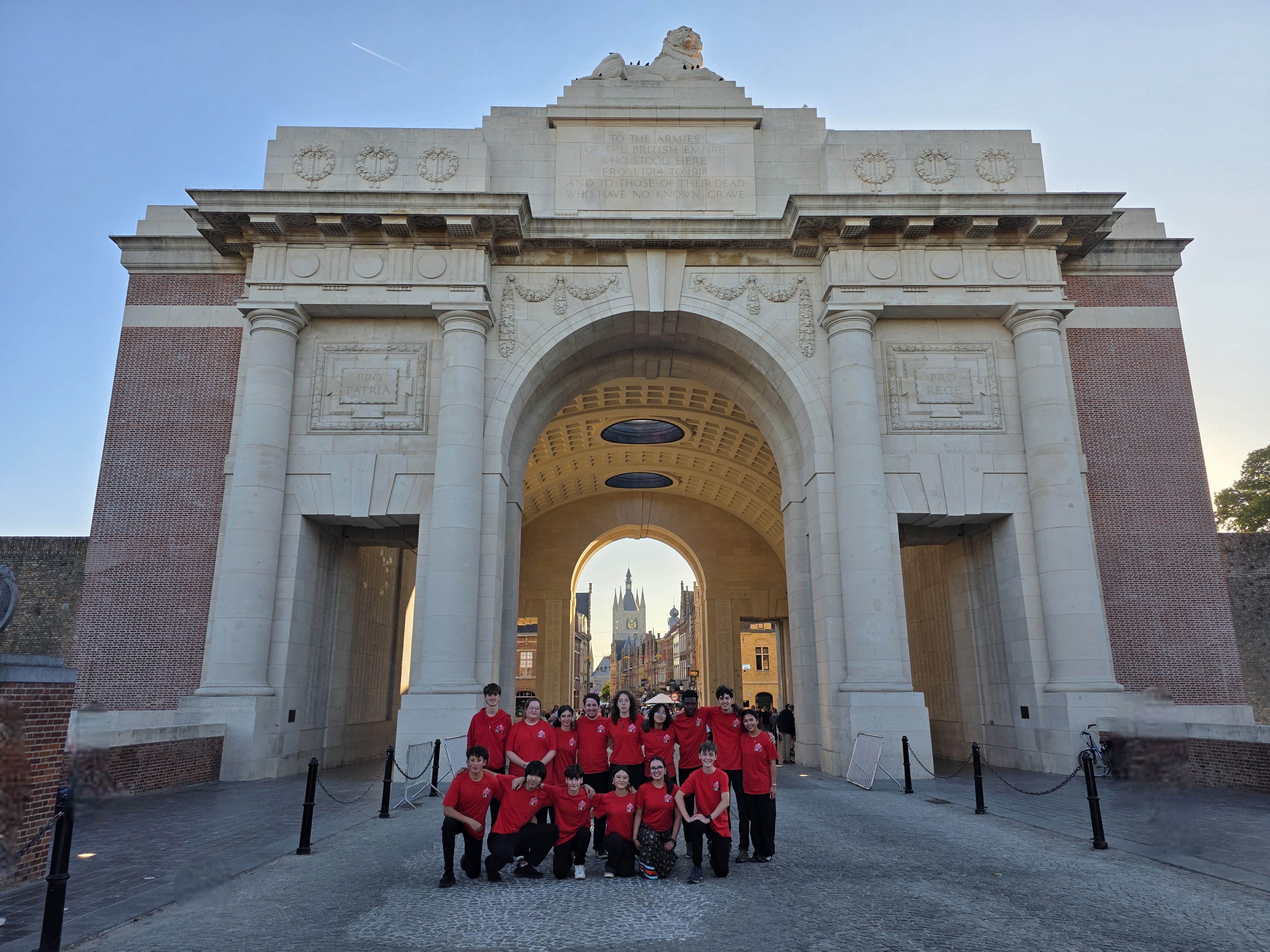
After spending time exploring the historic centre of Ypres, the students gathered at the Menin Gate for the daily Last Post Ceremony. Landon, Lorenz, Hannah, and Grace had the honour of laying a wreath on behalf of the Beaverbrook Vimy Prize Program, while Jack delivered a reading of the Kohima Epitaph. Earlier at the Menin Gate, Junior presented the story of a military surgeon, and Grace shared the story of an Indigenous soldier whose name is commemorated on the memorial.
Today each participant answered the question, "In two sentences, what does remembrance mean to you?"
Zeineb: Remembrance for me is events that were important for people that left an impact on their lives. For example, just as stones do not change and they will never move (like the Vimy Memorial), nor will our memories fade of their importance.
Grace: Today, I had the opportunity to carry the Vimy Foundation wreath at the Menin Gate ceremony. This experience has allowed me to realize the act of remembrance must be carried out consistently in order to truly honour those who faced the unimaginable.
Junior: Remembrance is not just thinking of the past, it’s to actively commemorate how an event has changed our present day. It’s gratefulness towards all those before us who sacrifices so much for us to be living as we do.
Jack: Remembrance is the act of honouring and understanding those who have come before us, it provides the collective space where those from different backgrounds can come together and share how we have all been shaped by the past.
Maximilien: Remembrance is the physical application of collected memories in a common, significant place. It’s by this collective act that the memories are gathered, shared and transmitted.
Sarah: Remembrance to me means lighting an old candle everytime so it never dies down. It’s like trying to keep a candle alive everytime its light starts to dim.
Nicolas: Le souvenir est très important pour moi. Il englobe les gestes de commémoration, le fait de se rappeler les soldats et les monuments. C'est une façon d'honorer ceux qui ont sacrifié leur vie afin que nous puissions vivre dans un monde meilleur aujourd'hui.
Jiwoo: Remembrance is an act to allow the past to remain within the present in a special way. It allows us to reflect on its wrongdoings to make a better future.
Lorenz: In my opinion, remembrance means attending ceremonies and exchanging with veterans. By doing so to remember is to be able to transmit our knowledge to the next generation.
Landon: Remembrance is to commemorate. Not by knowing one’s name but knowing one’s story.
Emile: À mon avis, commémorer signifie participer activement à toutes sortes d'activités de souvenir. Cela peut vouloir dire se rendre à des monuments, rendre hommage aux personnes disparues dans les cimetières et participer à des cérémonies.
Talia: Contrary to memory, remembrance is an act to keep memory alive. Whether through media, monuments or through word of mouth, remembrance is a commitment to the lives and sacrifices that can no longer honour themselves.
Mikayla: To me, remembrance is both an individual and collective experience. Every site we have experiences isn’t black or white - it’s grey and beautifully different for everyone.
Emily: Remembrance is the act of intentional and dedicated commemoration. It is how we keep people alive, no matter how long they have passed on.
Hannah: In remembrance we carry through in our lives all the lives who came before: their time cut short driving the hands of our clocks; their days apent in darkness shining in our gleaming gazes and wide eyes; their paths uncrossed and feel familiar under our travels. We laugh with their cheers, we smile with their tears; we live to the fullest of our lives and the fullest of their deaths.
On day 6, the students travelled across the First World War battlefields of Belgium with Steve from Salient Tours, who guided the group through several of the war's most significant sites.
Throughout the day, the students visited Messines Church, Tyne Cot Cemetery, Hill 60 and the Caterpillar crater, the Brooding Soldier Memorial, and Essex Farm Cemetery. At each stop, they learned more about the battles fought in the Ypres Salient and the lasting impact of the First World War on the landscape and those who served there.
Emily shared the story of her family member at the cemetery where they are buried, giving the group a personal connection to the history they have been exploring throughout the program. Later in the day at Étaples Military Cemetery, Lorenz and Zeineb presented their group project, "Women on the front," highlighting the important roles women played throughout the First World War.
Today's reflections are from Lorenz and Emily.
Lorenz Grefen
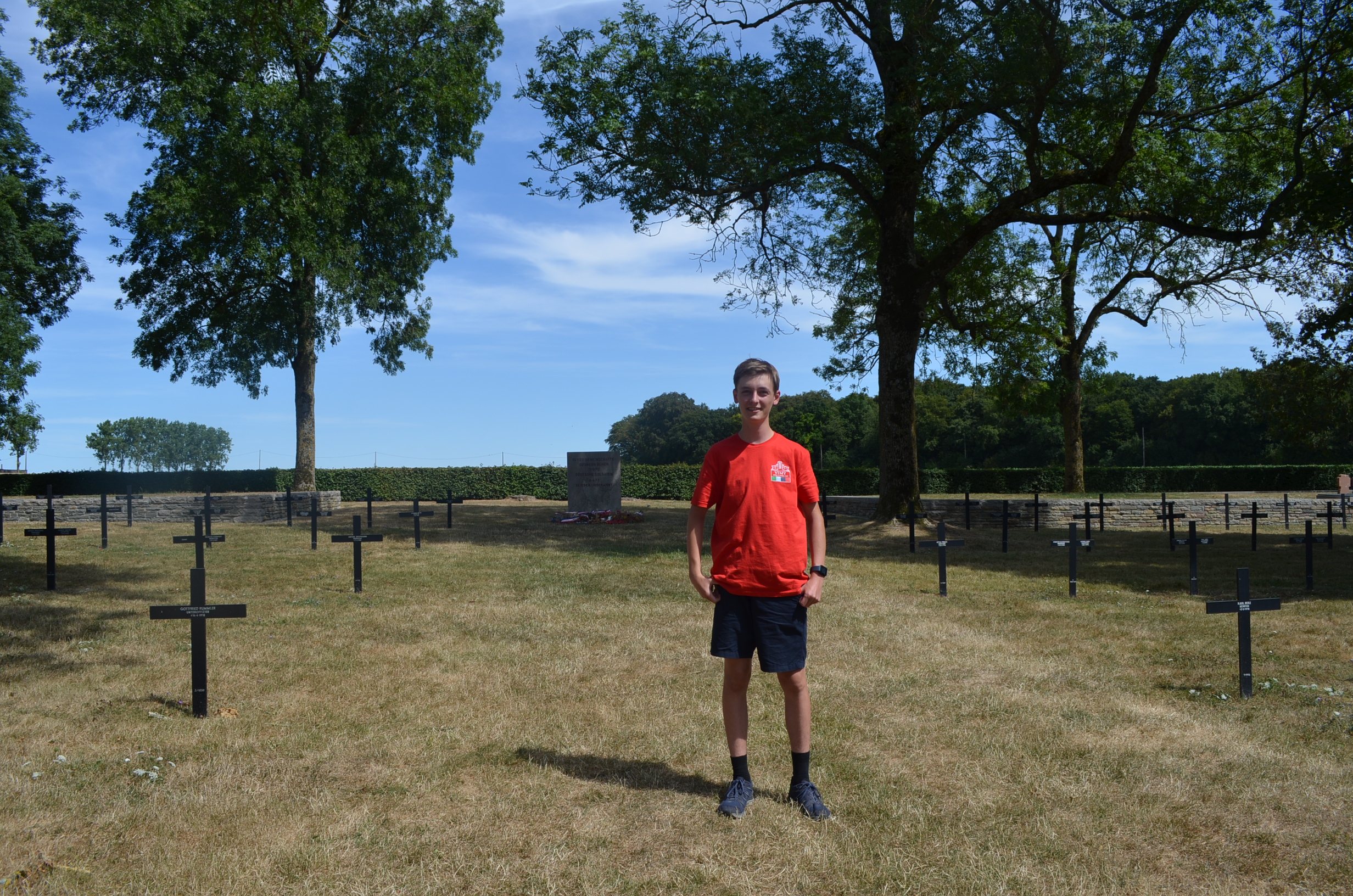
This morning, we woke up in the beautiful “Peace Village” in Mesen, Belgium. We boys started the day with a game of soccer, which we all really enjoyed.
After leaving our hostel, we met Steve Douglas, who has been a tourguide with Salient Tours for 23 years. He also owns a shop in Ypres, where he sells artefacts from the First and Second World Wars.
We met Steve at Sint-Niklaaskerk Church, where he gave us a very interesting explanation of the church’s role during the First World War. It served as the headquarters of German officers. After that, we visited Hill 60, where he explained the importance of mining warfare.
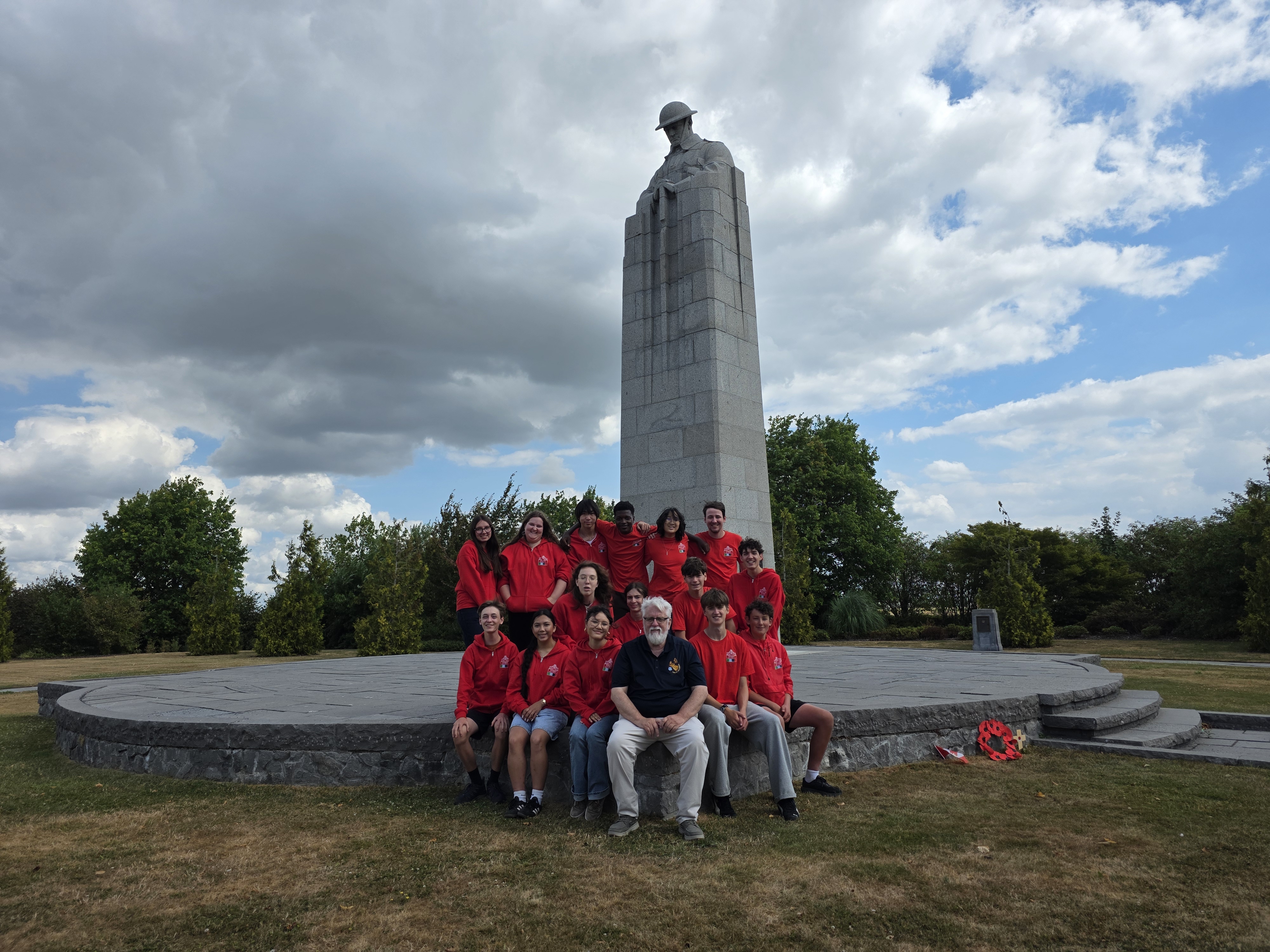
Our next stop was Tyne Cot Cemetery, where Steve gave us a vividimpression of what the war must have been like. We then visited the St. Julien Canadian Second Battle of Ypres Memorial. This monument was the runner-up in the competition to become Canada’s national memorial at Vimy Ridge but was not ultimately selected.
Our last stop with Steve was Essex Farm Cemetery, where we learned about Lieutenant-Colonel John McCrae. We also saw the grave of a 15-year-old soldier who lost his life on the battlefield. Seeing someone even younger than us who had died in the war made us realise the enormous sacrifices made by the Allied soldiers. It was a very emotional moment for all of us.
After Steve Douglas’s excellent tour, we had lunch. Our next destination was Boulogne-sur-Mer in France, where Emily gave a great presentation about one of her ancestors.
The last First World War site on our programme was the Etaples Cemetery, a huge cemetery for soldiers who died in hospital. Zeineb and I successfully presented our team presentation, “Women on the FrontLines.”
This was our final First World War historical site. We are now moving onto the history of the Second World War. Our destination for the nightwas Dieppe, where we ended the evening by relaxing on the beach.
Emily Todd
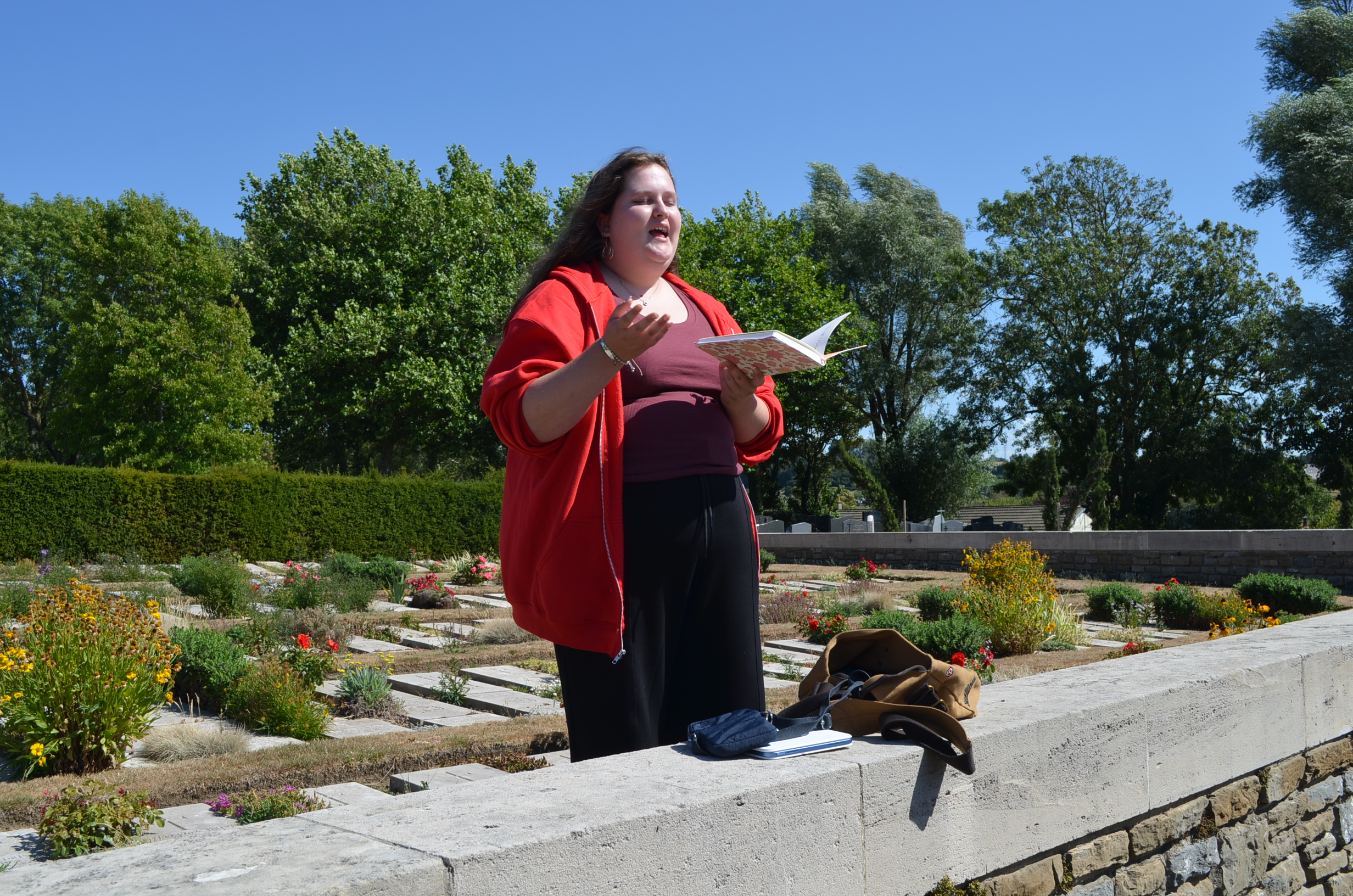
Today I saw my uncle - which is odd, considering he died 108 years ago.
This afternoon, after a fabulous tour of the Ypres salient from Steve, I had the opportunity to share with the group the story of my great (x3) Uncle Charlie, who served with the East Lancashire regiment for 19 months and died at just 20 years old in Boulogne base hospital.
After weeks of pouring over various records and thumbing through my own family’s collection of wartime memorabilia, Uncle Charlie has become a very personal figure to me. I often find myself wondering what he would’ve been like, had I have known him or how he would feel about me choosing to read into his life. It has been a great, if sometimes difficult, way of making our visits feel more personal and so to visit his grave today was a very powerful experience.
At first, I expected to feel the loss and nothing but, but coming away from his headstone having left a small tile with the Manchester worker bee emblem and his name, I felt an unexpected sense of pride. I am proud to have made the trip to see him. I am proud that I have helped to revive his memory and most of all, I am proud to be a part of this group of amazing people, who everyday, keep the memory of these men alive.
So, yes, I have seen my uncle. I know where he is buried and how he died and now, 19 others do too. For those that aren’t a part of that 19 or don’t know what I discussed, just know: on a beautiful, sunny day near the French coast, Charles Arthur Kirkham’s memory has been brought home.
Emily Also shared this poem that she wrote.
May the joy of thy salvation
Be their strength and stay
May they love and may they praise thee
Day by day
You grew as my mother did
Though many years ago
With dark hair like her father
And the same blood as my own
I have traced your every day
From start to very end
Talked of loss and great sacrifice
Beloved son and good friend
So in theory I know you well
My great uncle (times three)
Know your name and your number
And how you link to me
But it is so hard to feel you
When you are this far away
No living soul has ever met you
Nor known much past your name
What was your favourite colour?
How did you pass the time?
I long to know a deeper you
Each aspect of your short life
Would you be proud of what I have done?
Would you see the love in our grief?
What more do you wish you could have done
Had you have had the opportunity?
How odd to revive the memory
Of a man I feel I should know
Poor uncle Charlie
Another man who never came home
Hide him, O my saviour, hide
Till the storm of life is past
Safe into the haven guide
O receive his soul at last
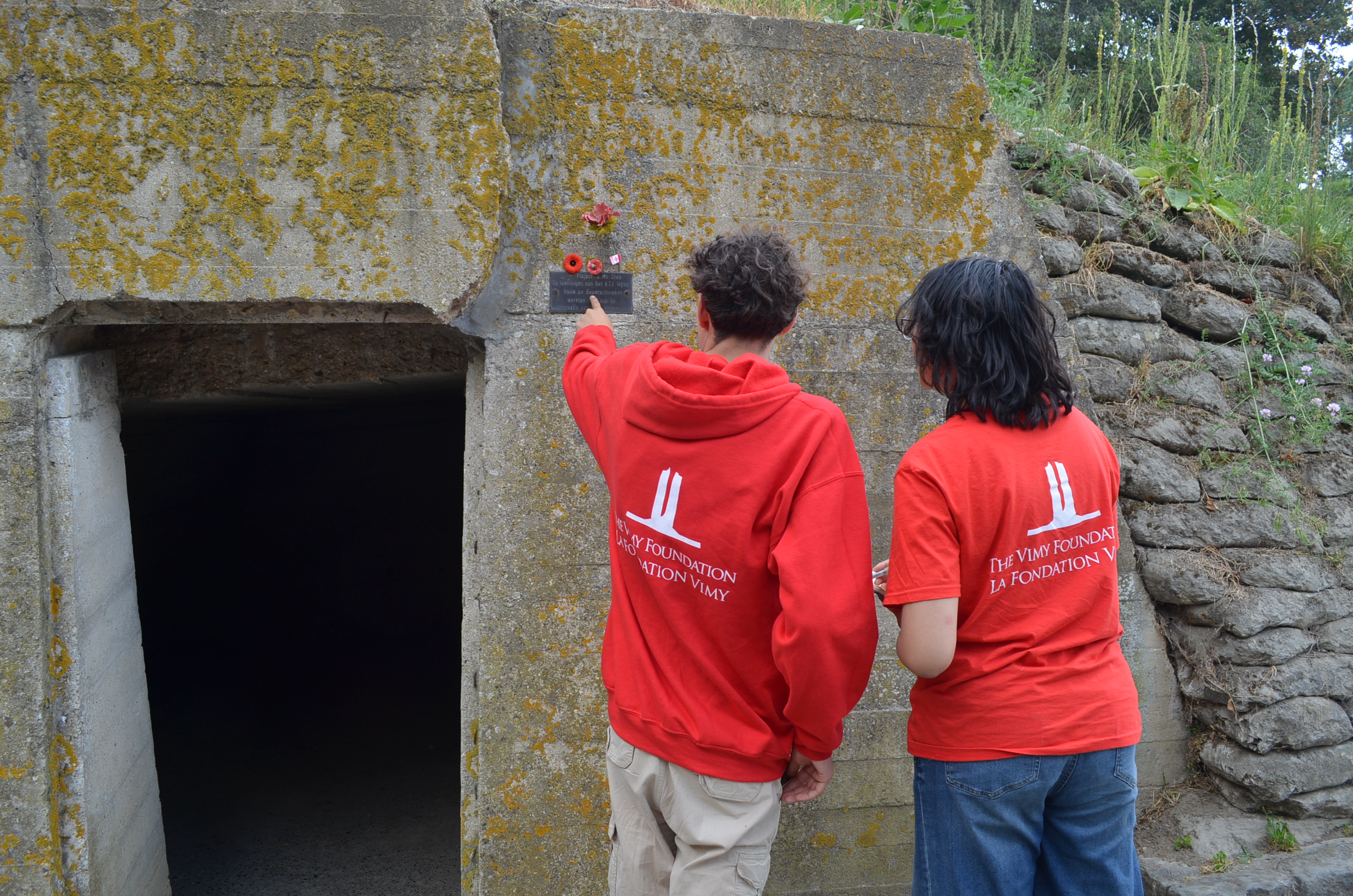
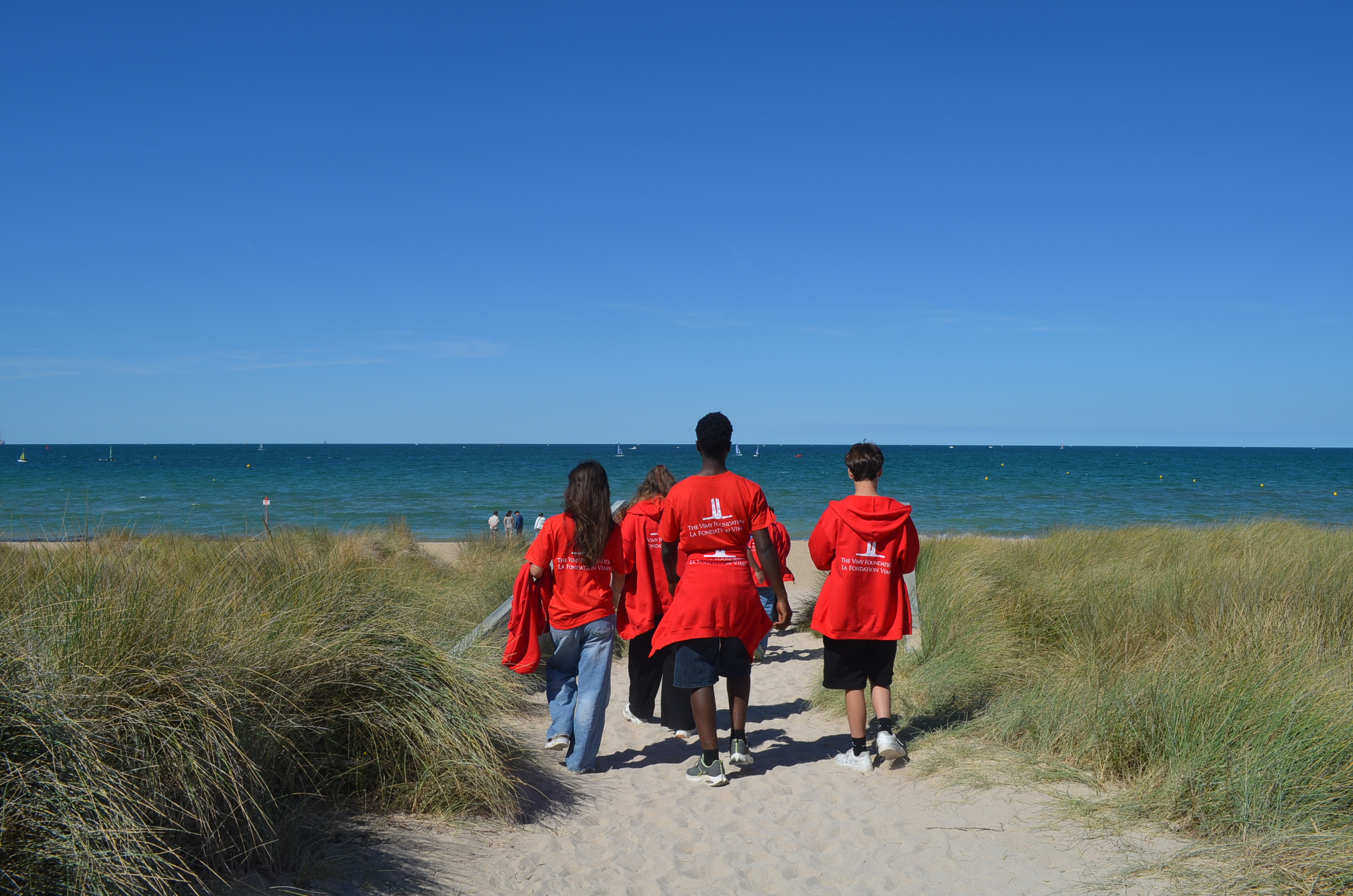
On day 7, the students explored Canada's role in the Second World War as they travelled from Dieppe to Normandy.
The day began with an overview of the Dieppe Raid led by Sean, who introduced the group to the events of August 1942 and the lasting significance of the operation. At the overview, Emily, Jack, and Mikayla presented their group project, "The Experience of Conscripted Soldiers," examining the perspectives and experiences of those who were called to serve during the war.
The group then travelled to Pourville Beach, where Sean led an interactive activity that encouraged students to think critically about the challenges faced during the Dieppe Raid. At Dieppe Canadian War Cemetery, Chloe presented her research on sexual violence in wartime, exploring an often overlooked aspect of conflict and its impact on civilians and military personnel.
In the afternoon, the students arrived at the Juno Beach Centre, where they were guided by Avneet through the museum, its exhibits, and the German bunkers overlooking the beach. The day concluded at Beny-sur-Mer Canadian War Cemetery, where Zeineb shared the story of her soldier and reflected on the personal connections that continue to shape remembrance today.
Today's reflections are shared by Hannah, Jack, and Junior, who reflect on another day of learning, discussion, and remembrance during the Beaverbrook Vimy Prize Program.
Hannah Liu
Dear home,
Today marked one of the later days of our experience. The loudest thought that rang in my mind throughout the day, crescendoing since Sean (PHD!) first told us at Mont Sorrel that we had reached the halfway point, was that we were nearing the end of our voyage together. I clung, with heightening fervour, to each new sight we saw and each old joke we made (Landon sure watched his head). I’m writing this now below an olive tree, sat on the patio of our hotel in Caen, with a bunch of our group nearby playing a World War II timeline card game and a fellow member reading outside as I scrawl this furiously in a now-battered notebook. We had just had yet another giant group dinner---tonight it was trying to best each other in geography games over white fish and rice. I found myself exceedingly moved by how close we have grown. Our connection was rather instant already but the closeness that we have forged and the openness with which we received each other is something I wish I will never have to leave behind.
It was the raucous Dieppe seagulls that roused us from our lovely seaside hotel. We took to the cliffs, saw the rocky expanse we had clambered over the night before, were thoroughly battered and buffed by wind but still heard through the gusts a thought-provoking presentation about conscription.
Pourville, just a skip away across the bay, was rocky and serene. The waves caressed the shore with much less of the fearsome violence of Dieppe. Still now I cannot speak surely if I was struck more by its calm, in contrast to the roaring of the war we knew---but could not hear---had crashed against those rocky shores, or the nasty precariousness of those rocks that even under my unhurried, civilian-soft feet seemed eager to send me tumbling down the slope.
What bleakness we saw of the landings’ aftermath nested neat and tidy now, between the quaint brick walls of Dieppe cemetery. Though we had been to a similar WWII cemetery the day before in Boulogne-sur-mer, it struck me with stark, bright overwhelm to see so many headstones, almost all with that God-forsaken maple leaf, so beautiful yet haunting, pasted over and over in endless rows.
The Second World War, I would learn in this busy day, was just that much more proximate---twenty short years, eh?---that the impact of loss struck through all the layers of intellectual interest and academic intrigue and patriotic fervour that had orbited my mind in varying degrees during the many days we visited sites pertaining to the First World War. At the Juno Beach Centre (a beautiful museum on those beaches) the raw pain and unquantifiable grief that built in me throughout the day finally bore all the way through my heart until I could keep it inside no longer. There was this film at the end of the museum---They Walk With You---and some brilliant artist had chosen, by some moment of genius, to include, at the end, photographs from divisions prior to H-Hour and the landings---then to erase, one by one, from those brief moments of joy and brotherhood all the boys who would not meet their friends again after those treacherous few days. The film did this maybe four or five times; by the second I had learned of the cruel ploy and tried desperately afterward to memorise each face, as if my memory alone could save each men from history, before they vanished. Smiles faded, bright eyes snuffed out like the last warm embers of a flickering campfire, and some final wall inside me I had previously thought insurmountable by sheer temporal distance was finally shattered.
Two others were also brought to tears. I remember wiping my eyes furiously when the theatre’s lights were still dimmed, streaking unwisely-applied eyeliner across the collar of the bright red Vimy Foundation shirt, a friend’s arm around me---but when our friends also surfaced from that dreadful cavern of digital ghosts, and when I saw their tear-streaked faces and brimming raw eyes, I realised that the least we could shed for the dead was some tears, and we held each other in our grief (fittingly, in a room dedicated to Remembrance and peacekeeping).
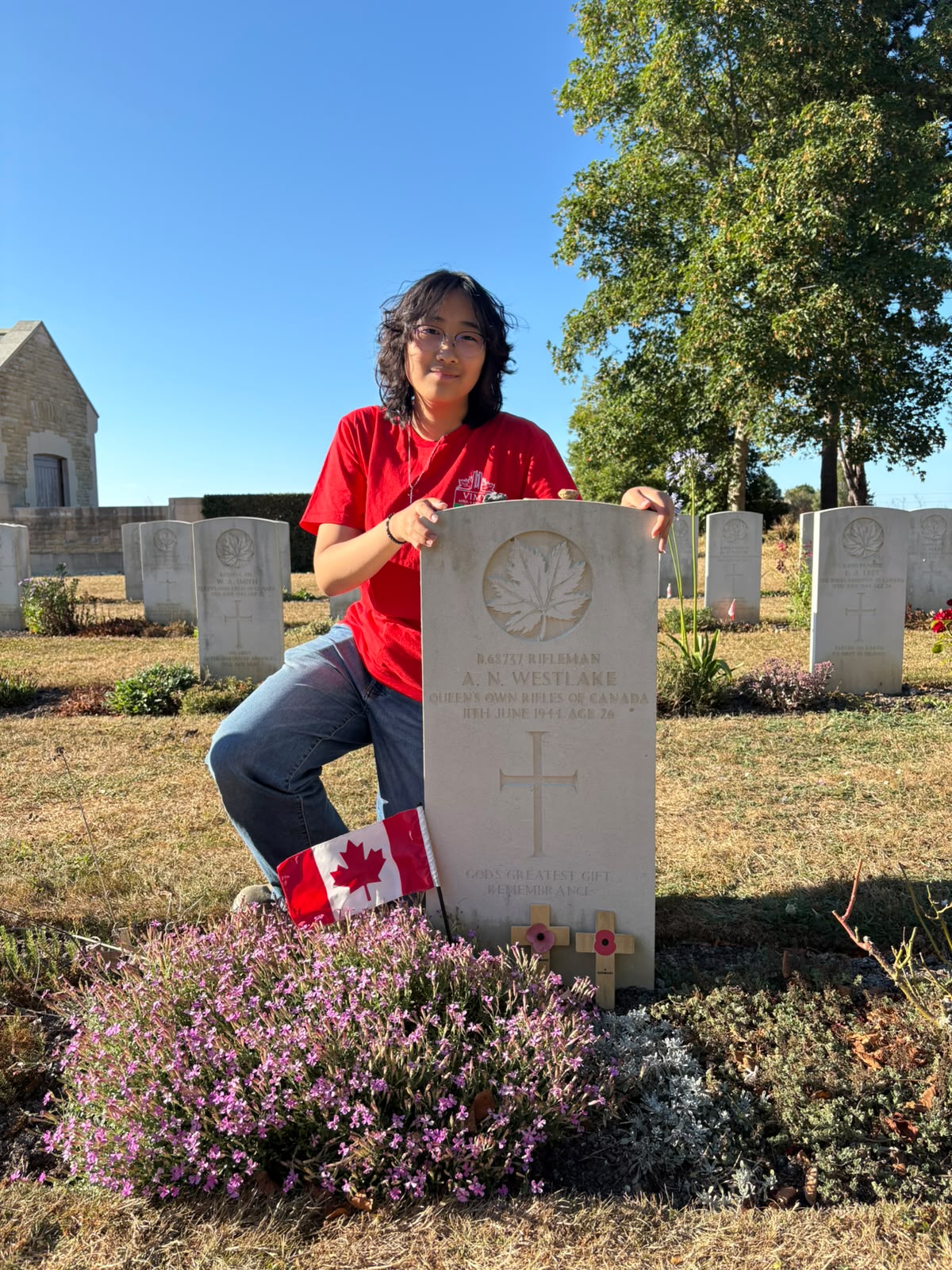
Later---the Bény-sur-mer cemetery. We’ve visited so many final resting places, and been surrounded by such a hanging shroud of death, that I worried I would grow hardened to such things. But my heart was still fragile and my eyes, freshly-dried, still wide. For the Second World War, the Canadians’ headstones now included the regiment they served with. Following Zeineb’s touching presentation about a young soldier from her town, I walked through the rows and encountered a great number of soldiers from the Queen’s Own Rifles---the regiment that is stationed (one of many) in Toronto, where I call home. Many of the buildings near where I live are still similar in façade to their 1940s appearance, so I have always found it especially poignant how “close” I can be to those Torontonians who walked the same streets. There is certainly a special kind of grief for those who lived in, served in, and died for the city that raised me, some decades later.
I was able to take an etching of the headstone of Albert Westlake, the middle brother of three, from Toronto, who were all buried in that cemetery. After, I took a moment to pray---for him, his brothers, all those brothers buried around him and beyond in the now-grassy meadows of France and Belgium, and for some shred of the peace they fought for. I hope some part of his soul may find a way home when I return, all too soon, to my city.
I am, of course,
Always yours,
Hannah
Jack Harrington
This morning, I had the honour and privilege to sit on the rocky shores of Dieppe, filled with beachgoers enjoying the beautiful day. However, as the morning progressed, we started to understand how that same ocean which surfers now grace also witnessed one of the most tragic moments in Canadian history - the Dieppe Raid of 1942. The waves lapping against these peaceful shorelines once felt the weight of almost 5,000 Canadian soldiers attempting to make it onto the beach. The sand watched as Allied troops sprinted straight towards incoming fire. And the ocean sat still and listened as the last bullets were fired and 916 Canadians were laid to rest. Almost nothing in our world lasts forever, but if there is one lesson I learned today, it is that memories do.
After a solemn reflection of the tragic Dieppe Raid, we went up to the city’s rocky cliffs while Mikayla, Emily and I shared our research about conscription. Once again, the ocean carried these soldiers from Canada, Africa, and beyond to the Western Front, where they fought during both World Wars. Many conscripts, especially those who were minorities, never received the recognition they deserved, and I hope that we played a small role in preserving their memory by discussing their stories today.
After spending the morning in Dieppe, we hopped on the bus and watched the ocean current flow south all the way to Juno Beach; the landing spot for around 14,000 Canadian troops on June 6th, 1944. These soldiers and their sacrifices are honoured and remembered at the Juno Beach Centre, an interactive museum that shares the stories and legacies of those who fought during D-Day. It was in a small video room in this museum that the most moving part of the day took place. Our group sat together to watch a documentary in remembrance of those who gave their lives fighting on the beaches of Normandy, standing up to protect the values and people that they loved the most.
Throughout this trip, I have had the opportunity to stand on the same beaches, wade in the same waters, and reflect in the same settings where these brave men and women once fought. Together, we must continue to share their stories and legacies, preserving their memory while also working for a more equitable and peaceful future.
Junior Dongmo-Tefouet
They walk with us.
Today after waking up, I sped through breakfast to sneak my last visit to the Dieppe beach. The peacefulness of these beaches that I experienced last night (minus the seagulls of course) was something I wanted to experience one last time before we made our way to Juno. This serenity is exactly why it is unimaginable for me to think that it was on this exact beach in August 1942 over 6000 men tried to break through the Nazi-occupied coast. 6000 men that had left the United Kingdom that morning, only for 2500 to return.
We proceeded to climb the nearby cliffs where Sean showed us the exact positions from which the Germans had set up their machine guns. When looking down at the beach and after completing Sean’s Dieppe activity, I knew the 1942 mission was doomed to fail because the Germans clearly had the higher strong point. Although at first I thought this was all in vain, I quickly realized that the lessons learned here were invaluable to the success of the Canadians when they would plan their operations at Juno (from the need of naval and areal support to the differences in approaching the beach and most importantly the mistake of choosing a rocky shore).
We then made our journey to the Juno Beach Centre, which took us about 2 hours, the same amount of years we were jumping forward in history. Luckily for you these 2 hours won't be too long because I will be talking to you about the importance of capturing these beaches in 1944. The goal wasn’t too complicated to understand; the allies needed a gateway to western Europe, and one of these deep ports was the perfect place to bring in personnel and equipment. In other words, it was vital to the advancement of the war and to supporting the Soviets who were already weakening Germany from the Eastern side.
The Juno Beach Centre was where I saw the in-person importance of the places and people we were about to explore. As a Canadian, to see the exact spot where thousands of fellow Canadians “charged” onto the beach of that June 1944 morning, I felt pride. We got to see the German fortifications/bunkers that were there at the time and talked about the techniques both the Germans and Allies used during battle. Throughout this museum, one common theme that resonated with me was the great sacrifice of the soldiers who lost their lives. Watching the film at the end of the exhibition spaces cemented this notion for me. It is from this inspiring movie about the legacy of soldiers that I got my opening sentence for my blog; They walk with us.
That although they are gone, their presence is still deeply felt.
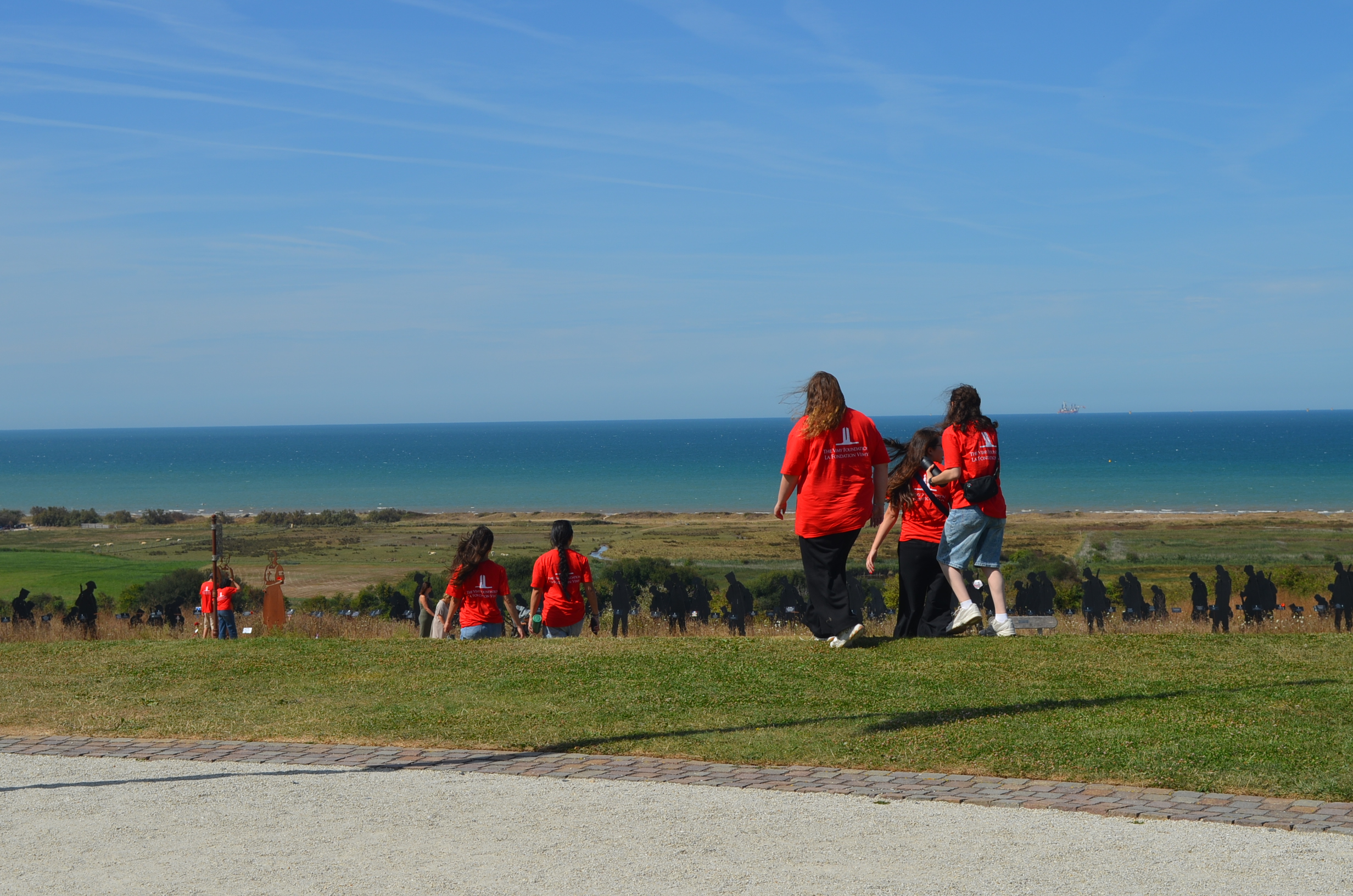
On day 8, the students continued their journey through Normandy, exploring sites connected to both the First and Second World Wars and reflecting on the different ways these conflicts are remembered.
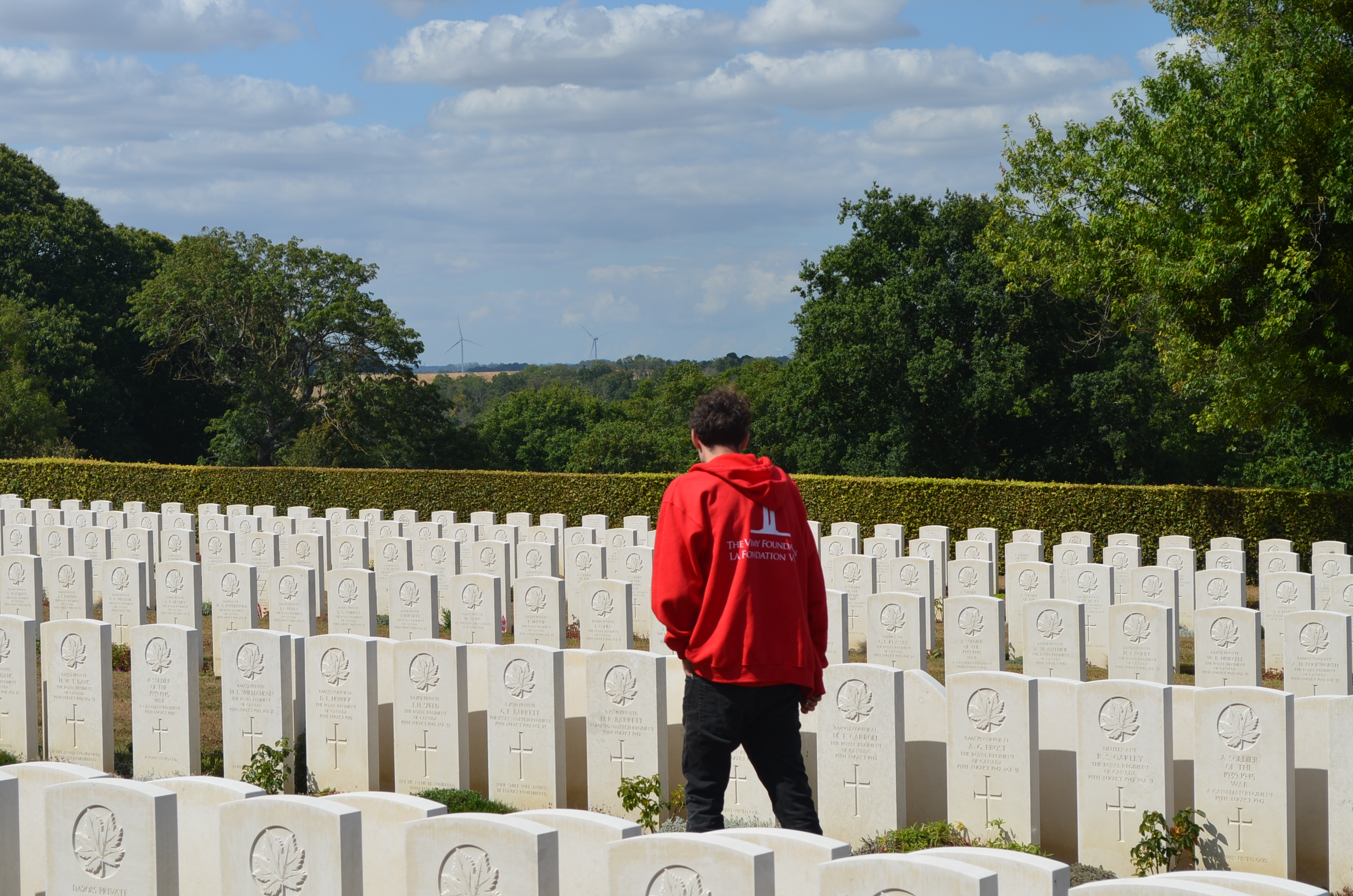
The day began at the Normandy American Cemetery overlooking Omaha Beach. The group then travelled to La Cambe German War Cemetery, where Rosalie presented on German Second World War graves and the ways Germany has approached the memory of the conflict.
At the German Battery, the students took part in an activity that placed them in the roles of different countries following the Second World War. Working in groups, they considered what their country might have demanded in terms of post-war memorialization and how they would want their contributions and sacrifices to be remembered. The activity gave the students an opportunity to consider remembrance from perspectives beyond their own.
At Arromanches, Jiwoo and Sarah presented their group project on the environmental impacts of the First and Second World Wars. The group then visited the British Normandy Memorial, one of the newer memorials in the region, before making their final visit of the day to the Abbaye d'Ardenne.
The Abbaye d'Ardenne is the site where 20 Canadian prisoners of war were murdered by members of the 12th SS Panzer Division in June 1944. The soldiers had been captured during the fighting in Normandy and were subsequently interrogated and executed in the grounds of the abbey. The site is a difficult one to visit, and it has become a meaningful final stop for the program as students reflect on the human cost of war.
Tonight, the students ended their day at Juno Beach, gathered in front of Canada House.
Today's visits brought together many of the themes the students have explored throughout the program: remembrance, the experiences of those who served, the ways different countries remember war, and the lasting impact of conflict on people and places.
Today's reflections are by Jiwoo and Talia.
Jiwoo Lee
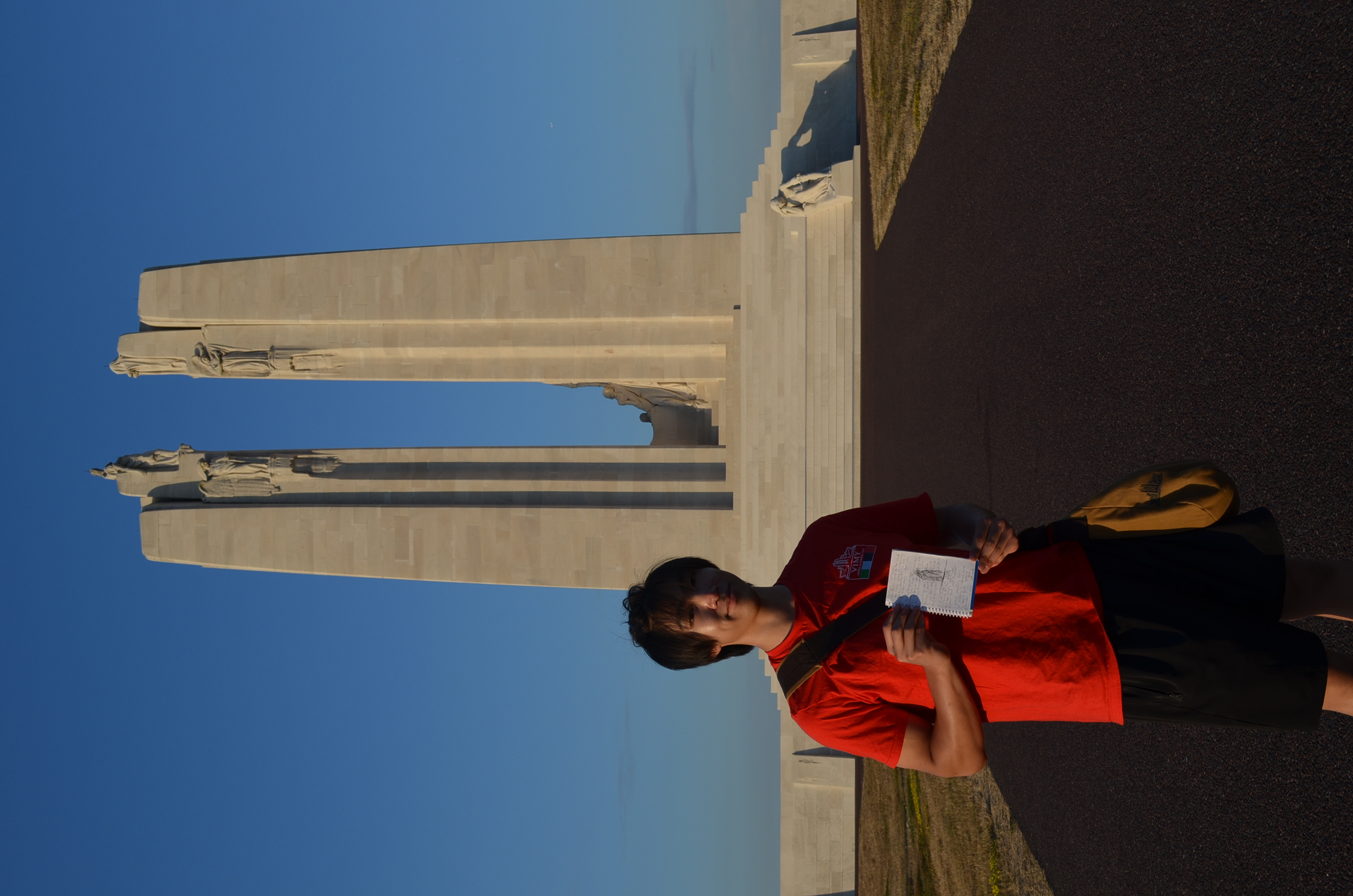
"That's why we came."
This was the response of a veteran from the Normandy Landings when the interviewer asked whether he was sad to see children playing on the location of which his comrades had fallen. It will be the line that will be engraved on my heart throughout this entire program - from the walls of Péronne to the Beaches of Juno.
Hi mom,
Hi dad,
Hi my favorite and only brother,
Today, I visited the Normandy beaches and they were indeed hundreds of times more beautiful than the muddy beaches back home in British Columbia - though I must admit that the South Korean beaches are still prettier (obviously).
I went to Omaha beach and felt as if I was living in the opening scene of Saving Private Ryan. The beaches were peaceful - a direct contrast to the events eighty years ago. Fortunately it was less crowded compared to usual. And in case you never knew, there was a giant cemetery and memorial. I am saying this because I never knew of it until today. It was surprising to see headstones in such large quantities.
I then visited the British memorial at Gold Beach - unfortunately there was no gold to be found there. The memorial was as massive as the other sites I have visited - they said that 20,000 names were engraved on its stones.
I also went to the German cemetery not far from the beaches. Did you know that the Germans made their cemeteries in forests so that the bodies are put back into nature? Well I learned of it recently from my German friends (they are cool people - well everyone in this program are cool people).
I was enjoying the tour, gathering new information, taking pictures, and just enjoying the moment.
"Real men never cry"
That is but a lie
That I tend to say
To put my tears away
But when I visited l'Abbaye d'Ardenne - the site of the execution of twenty young Canadian soldiers - my emotions erupted. The story of one young soldier stole my eyes.
I almost cried.
He was a young man. I saw his photo, he was happy and he had a lovely wife. His biography briefly mentioned his life - he married three years before his deployment and death - he even had a son. Initially, I was unable to comprehend why I cried - there was no connection between him and me.
I am fifteen, he was twenty-five.
I am single, his wife's name was Rose.
I have no issue, his son's name was Richard.
I don't know what I want to be, he wanted to be a farmer.
Nevertheless, what broke me was my own imagination. I pictured his life. A young man at the breakfast table with his wife. His young son gave him a warm hug while running out of the bedroom. It was beautiful, yet the reality was right before me - his fate at the Abbaye d'Ardennes.
Isn't it funny? I've seen many memorials and graves from the hills of Busan to the lands of the French. I've seen over two hundred thousand names and possibly even more, yet my emotions never erupted. However, today, reading the names and lives of twenty soldiers while seeing the emotions of my peers made my own emotions erupt.
Mom, whenever I visit these sites, I always wonder what the thoughts of these fallen soldiers would have been. Would they have been afraid? Would they have been angry? Or would they have had other thoughts? I don't know and perhaps I don't want to. However, it still creeps up to my mind, the question of death. It has always been a topic that has bugged me for years. Especially the question: What would I think when I see children play in front of my grave without knowing of my life. I couldn’t tell, but I knew there was always an answer somewhere deep within my soul. And mom, the best I can say for myself is that I believe I would feel relieved. No, I will be relieved to see those kids play innocently in front of my tomb.
As that veteran I mentioned at the beginning said, “That’s why we came.” I will be glad to know that I fell for their future. For a world where they are free, a world where they can be loved, a world where they can play. Obviously, I’ve never been to that point in life and should probably not say things easily, but this I can guarantee - it has always been embedded within my philosophy of life. Mom, you are right and will always be when you said that children deserve to play and that it is the responsibility of an adult to protect that. Mom, in visiting these sites, I became evermore determined to mark those words in my heart for the rest of my life. I am certain that I will make my own sacrifice for my future wife and children just like you did for me. And I am evermore certain that no matter what sacrifice I make, I will be proud of myself. Furthermore, despite any possible setbacks and moments of dread, I will never regret doing it for my future family and all of you.
Regardless of these emotions and moments of sorrow, today was an incredible day - I learned a lot and I shared a lot of my Napoleonic information on a tour of the First and Second World Wars. Today was the last full day of our tour, but the ending was more beautiful than I could have imagined - a final dance at the beach. It is the single best moment of my life and perhaps will be in the top until I die.
Mom, dad, and best brother,
I talked the most I ever had
Something I never thought I'd do
I hugged the most I ever did
Something I thought I'd never do
The end of our journey is near,
But it's been one of cheer.
I can't wait to see you soon
Love, Jiwoo.
Talia Jones
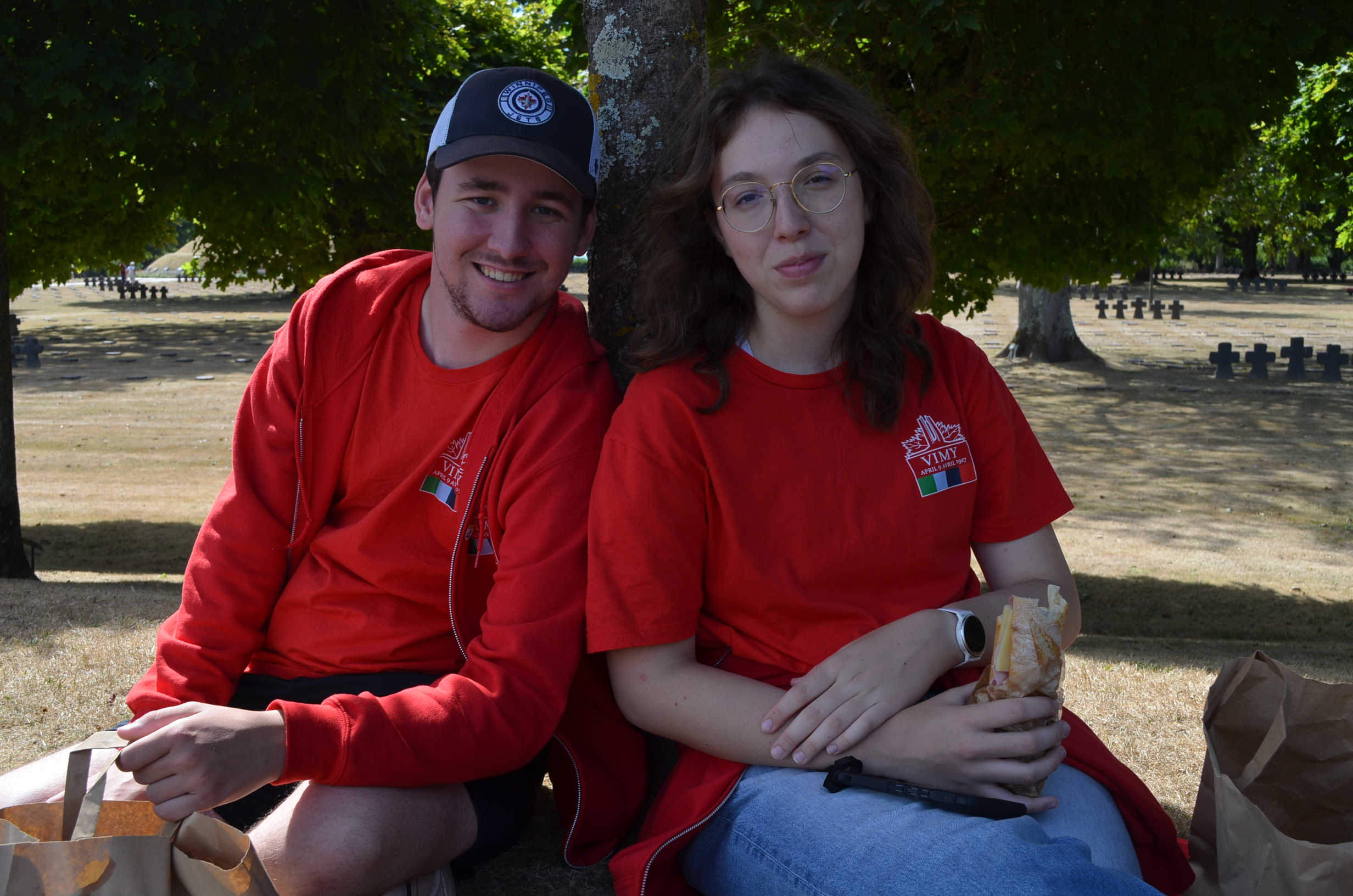
The small moments I'll remember forever
In my application for the BVP, I talked about a piece of art called Mustard Gas by Sir Eric Kennington. Essentially, this piece tackles ideas about individuality in war. Throughout this program, I've only learned more about this theme. I believe now that the most powerful history doesn't come from the big politics and battles, but rather the individual stories and small details that are often overlooked. So for my blog today I decided that I would find different little details about each of our sites, that you wouldn't have known about without visiting them yourself. To start off the morning, we went to the Normandy American Cemetery. One small thing that stuck out to me immediately, was how all the graves were roped off. This means we couldn't walk through the graves, and had to walk around, looking upon them as a collective. I find this significant, because it provides a completely different way to commemorate the soldiers than than all of the other CWGC and German cemetery we've been to. It feels more distant- like you're looking towards the America soldiers as a collective, rather than seeing the individual soldier's sacrifice. Quite frankly, it makes me sad, because I can't get up close and read the names. After that, we went to La Combe German Cemetery. Now this isn't the first German cemetery we've been to, and I wanted to talk about something I've noticed in every German cemetary, including La Combe. Because the allies only afforded the Germans so much space for their war cemeteries, I learnt that headstones often had at least 2 (often more) soldiers buried for each one. Landon even found one the other day with twenty graves below it. For me this is heartbreaking, because even as you look across the field and you see all these graves you have to remind yourself that there's at least three times as many people buried here as you can physically see. I never really knew that until I walked through the graves and read their names. The next site we visited was Longue sur Mer German battery. I expected to see the massive gun in the bunker, but I nearly missed the rips and disfigured sheet metal of the gun where it was hit by a tank firing upon it. This took my breath away because this disfiguration made it easy to imagine what the people manning this post went through; and it wasn't even a major talking point. Quite possibly my favourite site of the day was the British Normandy Memorial. As someone into architecture, I found this memorial incredibly interesting. I wanted to talk about one specific aspect, which was the pergola over the memorial. (A type of open air roof) I had many questions about why the architects chose it to be constructed out of wood. I think it being a type of open air roof made it feel natural in the environment; and I like how the Oak will naturally age and show the passage of time, which I find fitting. Considering I can already start to see the wood age, I find it an interesting deviation from your standard memorial, that people may not pay attention to. For the final site, we visited the Ardenne Abbey, where second works war Canadian POWS were executed. Initially I wasn't sure how I would capture this emotionally complex site in this blog. However, when I walked into the site all I could see was Canadian flags. Everywhere I looked, there were flags, big and small, from various Canadians that made the journey. As I walked through with the group, I found myself adjusting the flags, standing up the fallen ones, smoothing the crinkled ones, and re-hanging the large ones. This small action made it easier to be in the space and bear the weight of the deaths. It reminded me that it's not just the BVP bearing the burden of remeberance alone. There are thousands of canadians who have, are, and will make the pilgrimage we have, to remember the Canadians lost. Of course, how can I forget the little moments in our group itself. From the outside, we look like a serious, no nonsense, intellectual group of young people. And while of course, we are all those things, there's so much more to the group that people don't see. For example, tonight we went to Juno beach and played soccer in the sand. It was somewhat bittersweet as we rapidly approach the end of the program, but it's the small moments I'll remember forever, wether concerning the war, or our group.
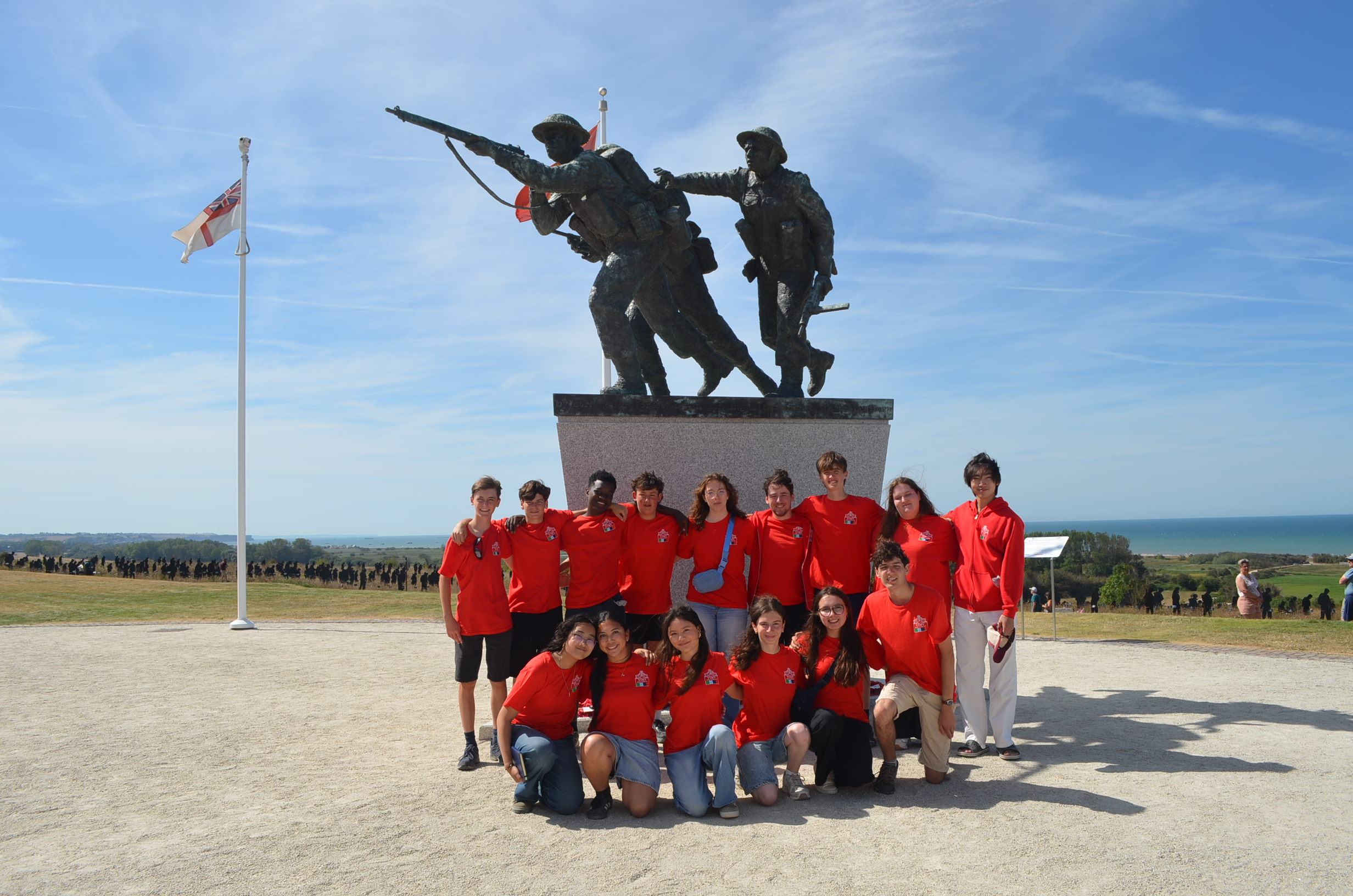
Today marked the final day of the Beaverbrook Vimy Prize Program. After ten days of travel, presentations, discussions, and visits across France and Belgium, the students came together for one final day of learning and reflection.
The day began at the Canadian Airmen Memorial, where Jack presented the story of his soldier. The group then visited the Falaise Memorial, exploring the history of the Battle of the Falaise Pocket and the final stages of the Normandy campaign.
At Bretteville Canadian War Cemetery, Talia, Emile, and Grace presented their research on Indigenous soldiers who served during the First World War. Landon then presented the story of his soldier, who lived just ten minutes from Landon's home, in a neighbouring town. His presentation marked the final soldier presentation of the Beaverbrook Vimy Prize Program.
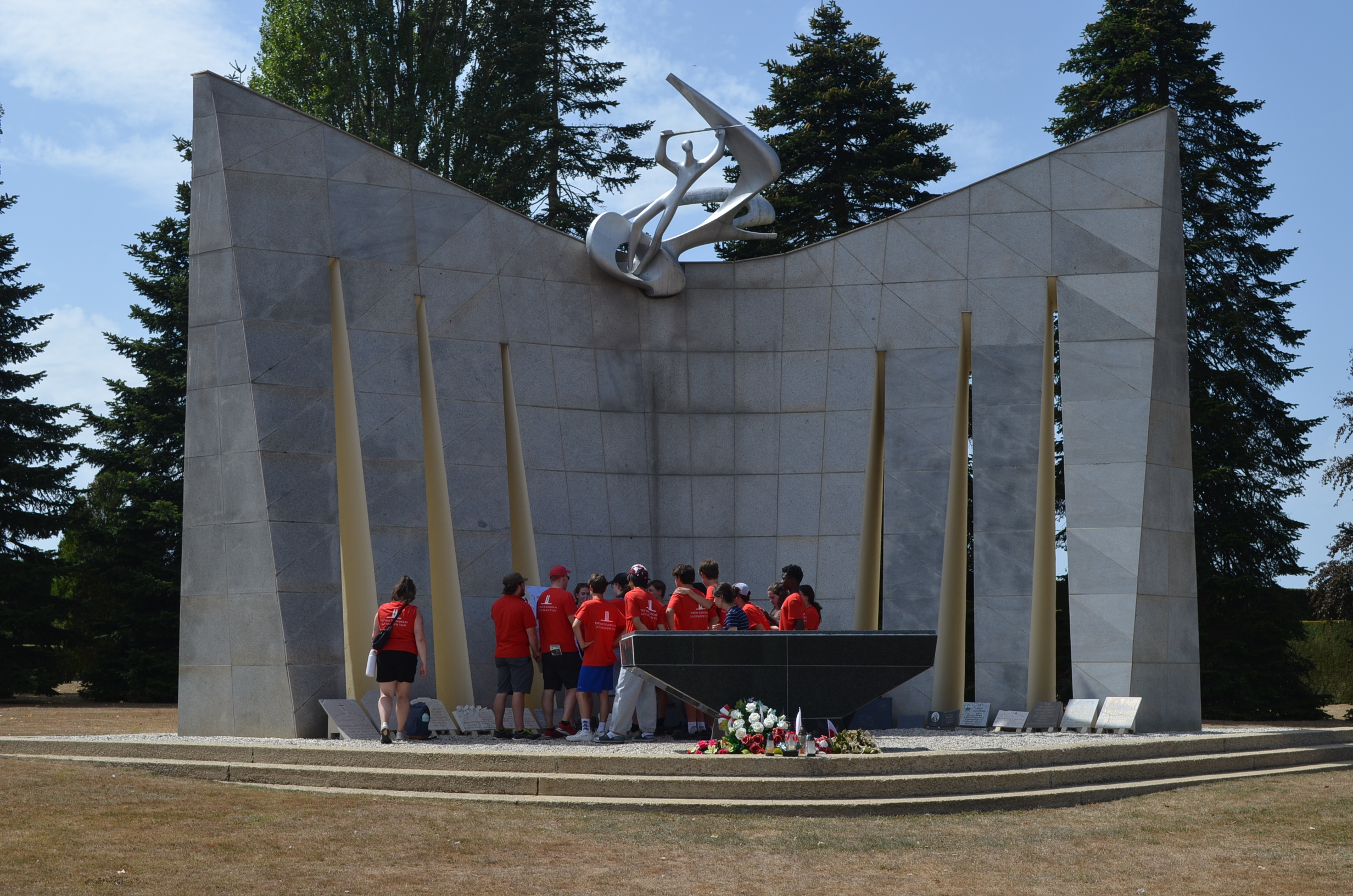
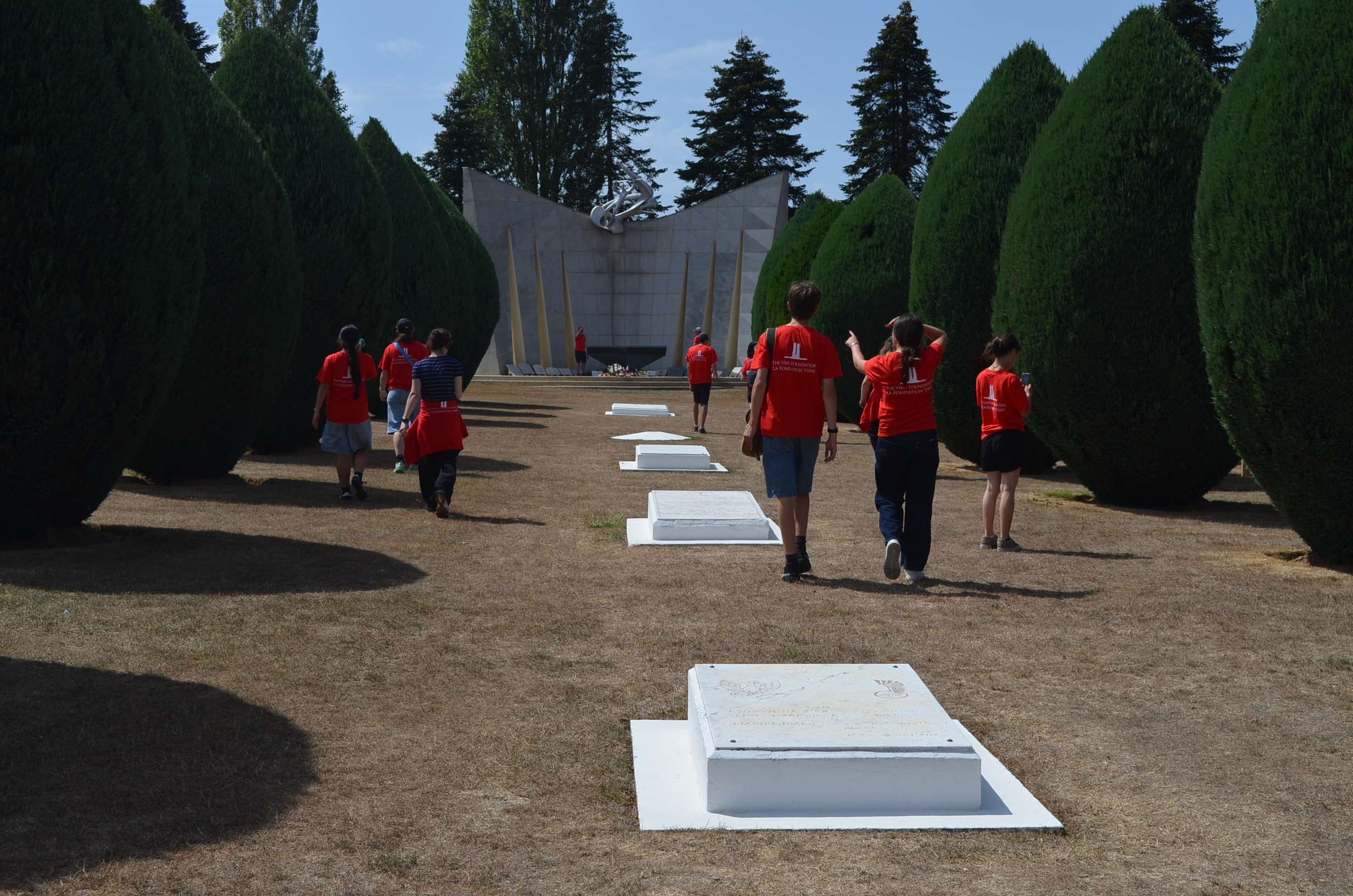
The students' final stop was the Polish Memorial at Urville, where Sean led the program's closing discussion using his maps of the First and Second World Wars. \
Today's reflections are shared by Grace and Maximilien.
Grace Myiow
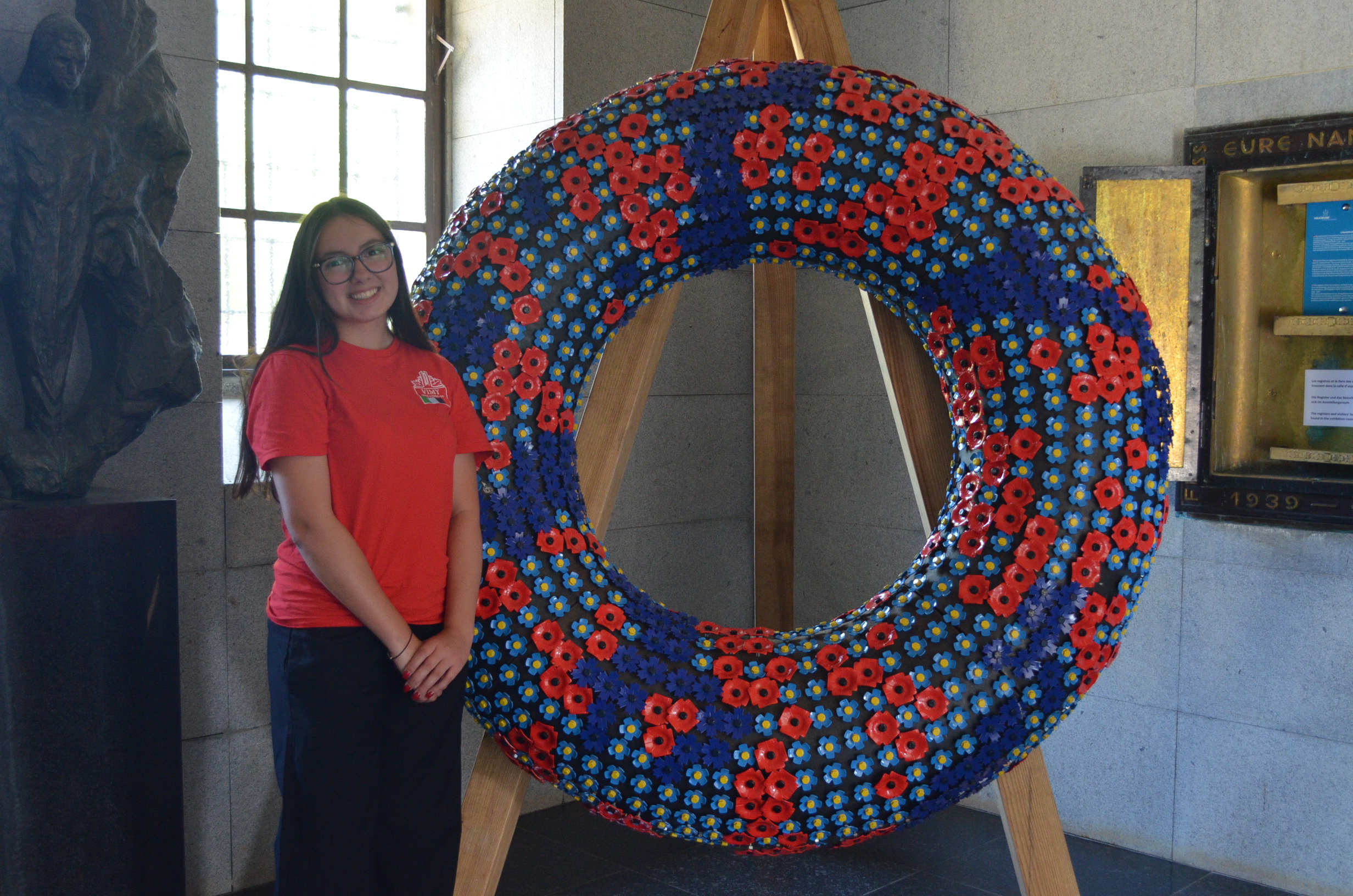
Dear readers,
Today I was assigned to blog, the very last day of our journey, and in my opinion I think this a perfect opportunity to recap the entirety of the 2026 Beaverbrook Vimy Prize.
Firstly, today was the day that my group presented our field presentation on the topic of Indigenous and Canadian war efforts. In this presentation, we covered various areas, from the contributions of each indigenous group to the major battles canada fought during the great war. All in all, our presentation was a success and also a great opportunity for me to speak about what i’m passionate about.
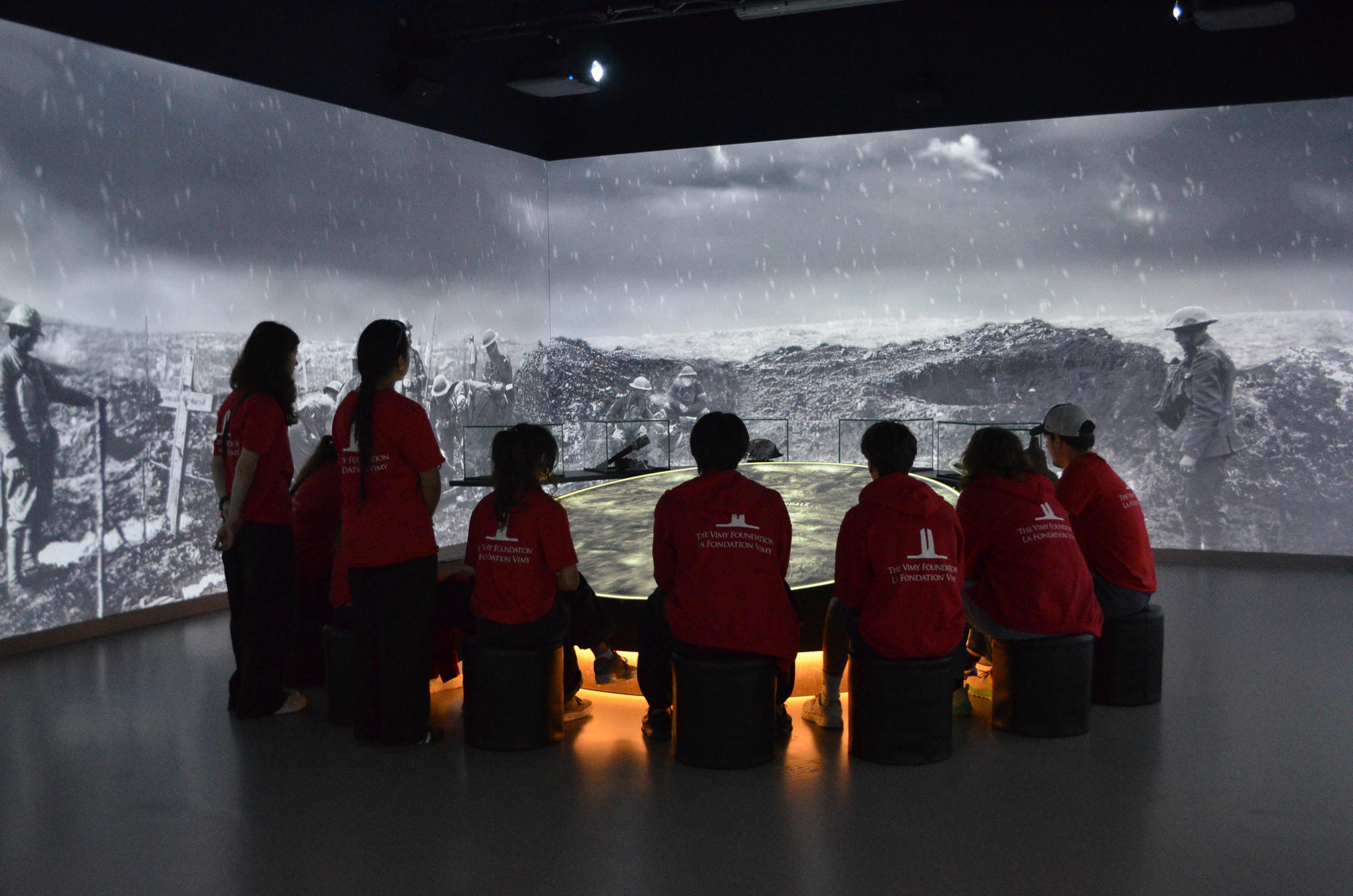
Today we also visited the mémorial de falaise museum in Normandie, where we just happened to run into a medieval festival happening in the square just outside. We walked through the museum with an audio guide, and we were able to learn about various aspects of the second world war.
We finished the day with a visit to a polish memorial where we officially concluded the programming of the Beaverbrook Vimy Prize.
Now, as I am sitting here to write this, after our last dinner together, alone in my room, after my original room’s door hinge broke (thank you for the help Thomas), i can’t help but tear up at the thought that tomorrow this will all be over.
When I applied to the BVP, i expected to come home with thorough knowledge of 2 of the most prominent historical conflicts, but I didn’t expect to come home with strong, lifelong connections.
This program has not only taught me important historical lessons, but also the importance of the friends you make alongside the challenges. We were able to have serious moments and discussions, but we were also able to have fun, laugh together, and play a pretty good game of cards.
Overall, words cannot describe how thankful I am to have been able to participate in a program like this one.
To the Vimy Foundation,
Thank you.
Maximilien Belvalette
Le programme touche finalement à sa fin. Snif!! C’est un double sentiment qui m’envahit. D’un côté celui de devoir tristement rentrer à la maison alors que que ce n’est qu’hier que je suis arrivé, et d’un autre tant de moments mémorables et de lieux que nous avons visités. Mais ce n’est pas parce que le temps défile bien plus vite que je le voudrais que la journée, à l’instar des autres, ne fut pas remplie d’émotions. Cette journée a débuté sous la légère bruine matinale qui fait le charme du paysage normand. C’est donc à l’aérodrome de Falaise que nous avons débutés notre ultime journée de visite. Plus précisément devant la plaque pour les aviateurs canadiens ayant combattu pendant la Seconde Guerre mondiale. Cette plaque nous rappelle tristement que de nombreux pilotes ayant perdus la vie au dessus de l’océan n’ont généralement pas de tombe sur laquelle les familles peuvent venir se recueillir. Pourtant ce n’est pas ce ça qu’a voulu nous parler Jack lorsqu’il a présenté la trop coûte vie de Walter Henri Plant. Ce dernier, pilote canadien est décédé lors d’un exercice de pilotage avec 12 autres camarades à bord avant même d’avoir participé au moindre combat. Aurait il été un bon pilote une fois en action ? Nul ne le saura jamais et pourtant doit il être commémoré de la même façon que ces compagnons morts en action ? Sa détermination à se battre alors qu’il n’en a pas eu l’occasion suffit elle a l’honorer autant que les autres ? La réponse appartient à chacun venant au mémorial et apprenant son histoire.Sur ces questions nous sommes allés dans la partie médiévale de la ville de Falaise. Après un coup passage à la foire en attendant son ouverture, nous avons visité le musée dédié au civils. Dans une démarche moderne de partir des civils pour parler de la guerre, le musée présente la quotidien des civils français pendant le conflit. Depuis l’exode jusqu’à leur perspective sur la libération en passant par l’occupation, le STO, la déportation… Une muséographie très intéressante avec une présentation d’objets ou de facs-similés en premier avant d’élargir grâce au cartel. Le découpage thématique plus que chronologique et géographique permet de comparer les conditions de vies. La visite de ce musée se termine sur une projection d’images d’archives de bombardements pendant la bataille de Normandie dans une salle particulière. En effet, son sol est recouvert de verre laissant voir les vestiges du bâtiment présent avant le musée, celui qui fut détruit dans les mêmes bombardements que l’on voit à l’écran.3000 noms. C’est le nombres de soldats enterrés dans le cimetière de Brethville sur Laize. mais ils ne signifient quelque chose à chacun que lorsque l’on connaît leur histoire. C’est ce que s’est proposé de faire Landon en nous parlant de John wendall macneill, soldat de son village natal à PEI et enterré dans ce cimetière après sa mort dans la libération de Caen. C’est uniquement après que son nom écrit sur une stèle devient une histoire, une personne de qui on se souvient. De plus, nous avons aussi écouté la présentation de Grace, Émile and Talia sur l’effort de guerre des autochtones canadiens. Un sujet pourtant primordial dont on ne parle presque jamais, et qui entraîne dans l’oublie de courage de milliers de soldats autochtones. Se souvenir de la guerre c’est donc de se souvenir de tous le monde, chaque acteur qui fut de proche ou de loin impliqué dans le conflit. C’est pour cela aussi que nous avons fini notre semaine dans la cimetière polonais, témoin du sacrifice de ces soldats venus libérer le sol français alors que le leur était tout autant occupé.Et puis qu’il était cruel ce retour sur Paris, symbole de la fin de ce voyage. Ce trop long trajet en bus qui a laissé le temps à chacun de se rappeler de ces instants partagés tout au long de la semaine. Un goût amère et autant sucré qui mêle à la fois notre conscience nouvelle sur la guerre et notre expérience personnelle sur l’ensemble des sites que nous avons visités. Hier je connaissais, certains par cœur, les sites et champs de bataille mais aujourd’hui je les vis au travers des yeux et des des mémoires parfois familiales de chacun avec qui j’ai eu la chance de passer cette formidable aventure. Merci à eux tous.
Check out our products in our boutique
View All Products


$ 300.00
$ 300.00
.png)
$ 300.00
$ 300.00

.png)